

Designing a part that’s both lightweight and strong is both a great promise of 3D printing and one of its biggest frustrations. Especially when it comes to gyroid infill. These complex internal structures look great in theory and perform well in certain cases, but figuring out how they’ll actually behave under load has always been something of a guessing game.
A research team at the University of Maine’s Advanced Structures & Composites Center is changing that.
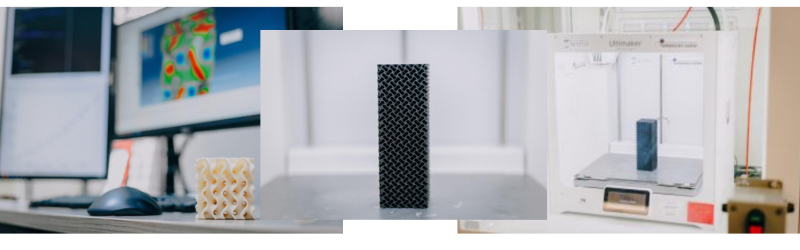
Using a combination of simulation and physical testing, the team has developed a method to predict how gyroid-filled parts will perform under stress—specifically, how and when they’ll yield. This gives engineers the ability to fine-tune designs for strength and weight without flying blind.
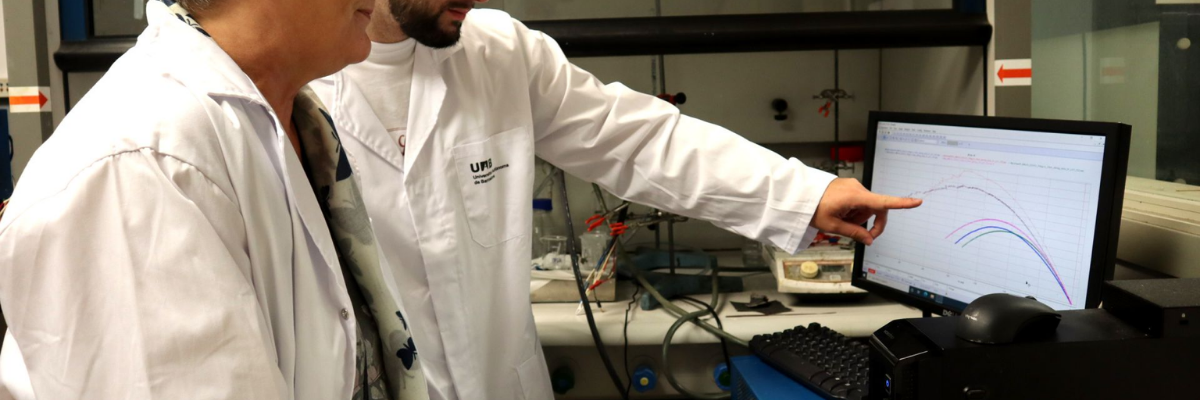
Philip Bean, a research engineer at the center, worked alongside professors Senthil Vel and Roberto Lopez-Anido to run simulations of 3D-printed samples, then validated those simulations against actual printed parts. The tests confirmed that the models could accurately predict when a part would deform or fail. This is something that hasn’t been reliably done with gyroid infill before.
That kind of predictability matters. Engineers working in automotive, aerospace, and other industries where weight and performance are critical can now take a more confident approach to structural part design. Instead of overbuilding or running endless iterations, they can rely on tested models to get closer to the final answer faster.
The team’s findings were published in Progressive Additive Manufacturing, in a paper titled “Investigation of the nonlinear response of gyroid infills for prediction of the effective yield strength.”
Bottom line: this isn’t just a material tweak or a flashy new infill pattern. It’s a practical step toward making additive manufacturing more reliable for structural parts, and getting rid of some of the guesswork that still holds engineers back.
Original Story: UMaine engineers find new method for stronger, lighter 3D-printed parts – Maine College of Engineering and Computing – University of Maine