
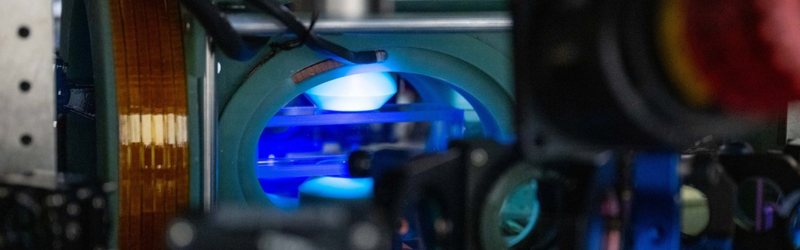
Late one September morning in Pasadena, a small team of Caltech researchers stood in front of their experiment, watching as thousands of tiny points of light appeared on a screen. To the untrained eye, it looked like a star field. To them, it was something far rarer: 6,100 cesium atoms, each one held in place by a laser beam, each one a potential quantum bit.
For years, quantum computing has lived with a contradiction. Everyone knows the machines will need staggering numbers of qubits to do anything truly useful. Yet, every time scientists added more qubits, something seemed to break—errors mounted, control slipped, coherence times dropped. Bigger never really meant better.
That’s what made this moment different. With their new array, the Caltech team had not only scaled up to record-breaking numbers, they had done so without sacrificing quality. The atoms stayed coherent for up to 13 seconds, almost ten times longer than anything comparable. When they nudged the qubits with pulses of light, the error rate was vanishingly small—roughly one failure in 5,000 tries. And, remarkably, they could move the qubits around like puzzle pieces, shuttling them hundreds of micrometers without disturbing their fragile quantum states.
In the lab, the excitement was palpable. Lead researcher Manuel Endres later reflected: “This is an exciting moment for neutral-atom quantum computing … We can now see a pathway to large error-corrected quantum computers. The building blocks are in place.”
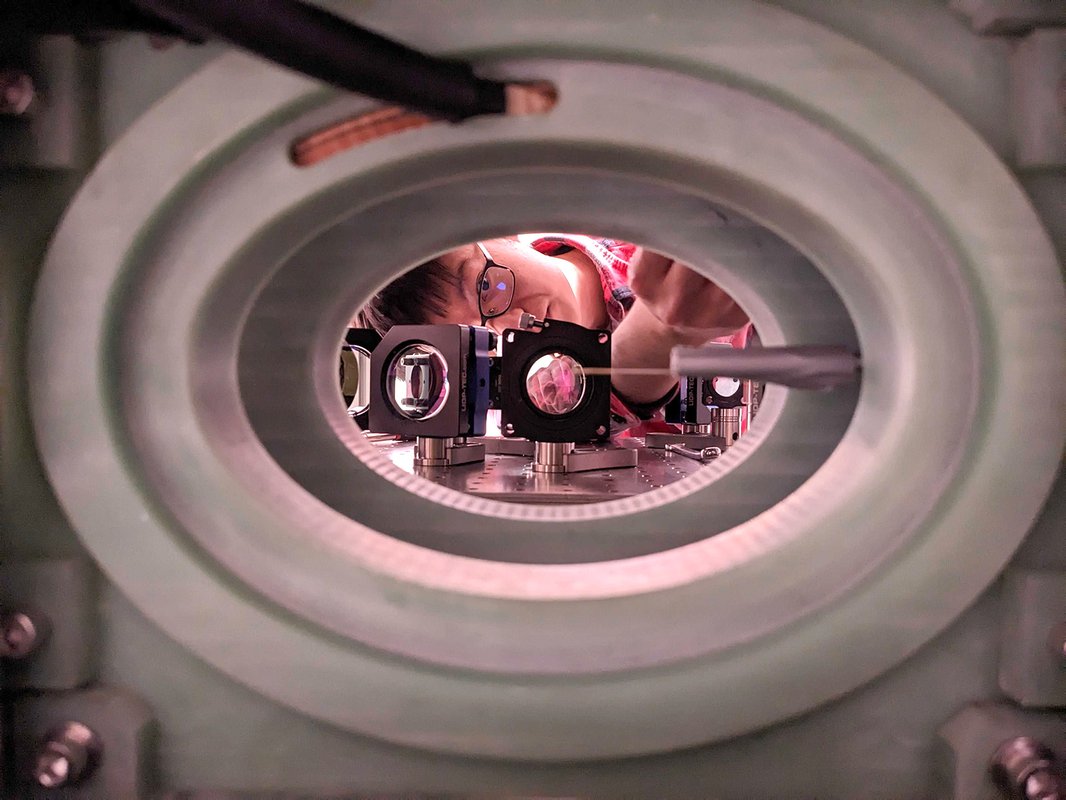
Behind him, the students who had spent countless hours fine-tuning the lasers—Hannah Manetsch, Gyohei Nomura, and Elie Bataille—shared quiet smiles. The array wasn’t just a grid of trapped atoms; it was proof that their field could dream bigger.
In quantum computing, milestones are usually measured by small increments—a few more qubits here, a slight bump in fidelity there. Caltech’s leap to 6,100 fully controlled qubits feels different. It tells a new story: that scaling doesn’t have to mean compromise, that the dream of fault-tolerant quantum machines isn’t just theoretical anymore.
And so, in a quiet Caltech lab, under the glow of thousands of optical tweezers, the future of computation took a visible step forward.