

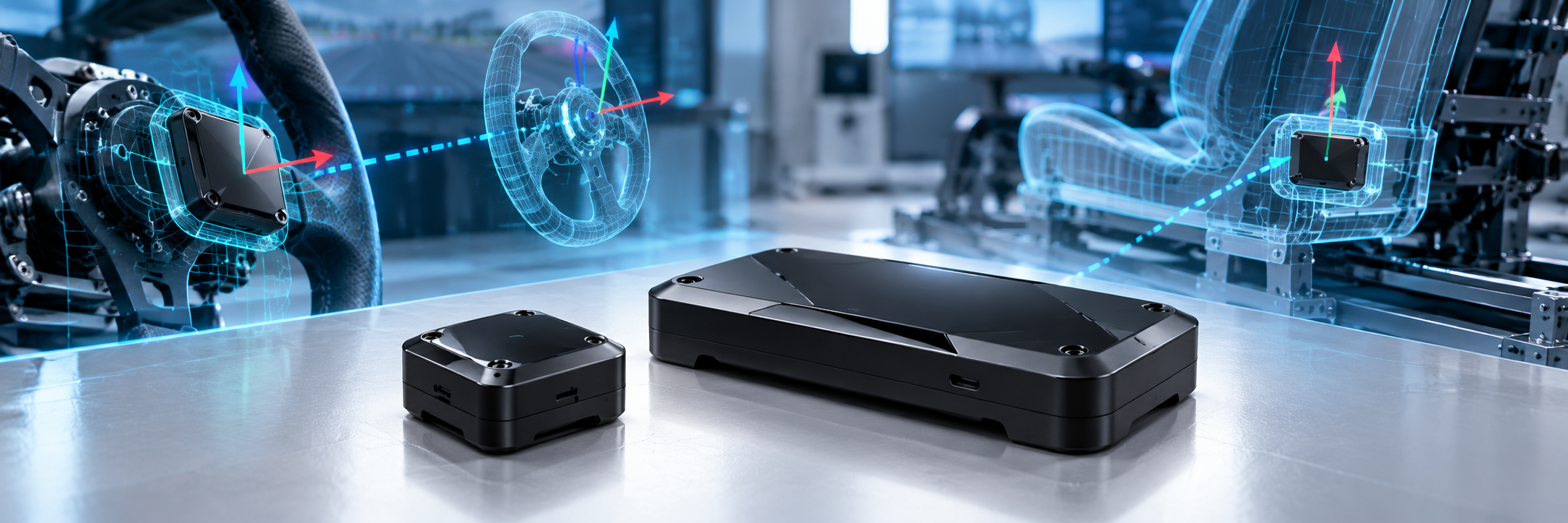

As embedded systems increasingly rely on spatial awareness, robotics, and smart-building analytics, MIKROE’s new LightRanger 14 Click arrives as a compact way to add high-precision depth sensing to nearly any design. Built around the ams OSRAM TMF8829 direct time-of-flight (dToF) sensor, the board delivers multi-zone depth mapping, long-range detection, and a developer-friendly interface for rapid integration.
Multi-Zone Depth Mapping in a Small Form Factor
The TMF8829 brings several integrated features—SPAD detection, time-to-digital conversion, and onboard histogram processing—allowing the module to produce structured depth maps in real time. Developers can choose resolutions from 8×8 up to 48×32 zones, with:
-
80° field of view
-
0.25 mm depth resolution
-
Ranging from 10 mm to 11,000 mm
-
Integrated VCSEL + multi-lens array for uniform illumination
These specs make the board well-suited for robotics, gesture interfaces, SLAM applications, people counting, and autofocus systems.
Drop-In Integration With mikroBUS
Like the rest of MIKROE’s ecosystem, LightRanger 14 Click is designed for fast development:
-
I²C (I3C-compatible) and SPI communication
-
Interrupt and control pins
-
mikroBUS™ support for use across hundreds of development boards
-
ClickID for automatic identification
-
mikroSDK open-source libraries
The Click format enables engineers to prototype ranging and 3D-aware applications without building custom sensor hardware from scratch.
Part of a Growing Sensor Platform
LightRanger 14 Click joins more than 1,800 mikroBUS-enabled boards and over 100 optical sensing modules in MIKROE’s catalog. Hundreds of ready-to-run examples, including projects using this board, are available on the company’s EmbeddedWiki platform.
With its high-resolution dToF engine and plug-in compatibility, LightRanger 14 Click provides a practical path for adding depth perception to next-generation embedded devices—without the complexity or cost of larger LIDAR systems.