


In power electronics, some problems show up in nearly every design—no matter how many times you’ve solved them. You’re trying to hit tighter efficiency targets, squeeze into smaller thermal budgets, and keep switching speeds high without inviting EMI or reliability issues.
And most of the time, the pressure isn’t to reinvent the wheel—it’s to make the current design run cleaner, cooler, and more efficiently.
That’s where small component-level decisions pay off in a big way.
What’s Dragging Your Power Design Down?
Power losses in switching stages and motor drives don’t just reduce efficiency—they add heat, require larger heatsinks, and sometimes force performance tradeoffs you don’t want to make. Whether it’s in a DC/DC converter or a compact motor control loop, these challenges tend to show up in the same places:
-
Higher conduction losses due to MOSFETs with higher RDS(on), especially under load
-
Slower switching speeds that add loss or reduce control precision
-
Thermal strain that builds up over time and cuts into reliability
Even small inefficiencies add up fast, especially in designs running continuously or under variable loads.
So where’s the low-hanging fruit? Often, it’s in the MOSFET. Not the part that gets the spotlight—but the one that’s working in the background every cycle, every second.
A Smarter Choice at the Switch
The ROHM’s RS7 MOSFET solves the problems that slow down switching systems, motor drives, and DC/DC converters.
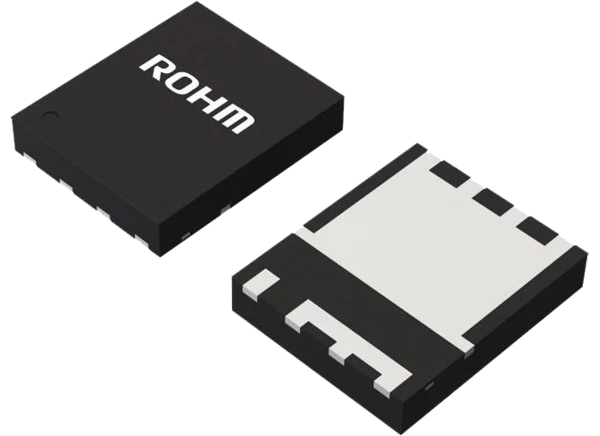
With low RDS(on), it reduces conduction losses right at the source. Its high-speed switching helps drive up performance without generating excess heat. And it’s built with automotive-grade ruggedness, which translates into long-term reliability even in thermally constrained or high-stress environments.
It’s the kind of drop-in part that delivers instant improvements without requiring a full redesign.
A Better Baseline for Efficiency
Choosing a higher-performance MOSFET doesn’t just reduce heat—it gives you more options. Less power loss means:
-
Smaller heatsinks
-
More compact layouts
-
Longer runtime for battery-powered designs
-
And more headroom for performance gains elsewhere
So, if you’re trying to build a better power stage, without adding complexity or cost, it starts with better silicon. And the RS7 is a clean, reliable step forward.