

We spend a lot of time talking about faster data. Higher bandwidth. Lower latency. Bigger pipes. But there’s another storage problem that doesn’t get nearly as much attention: how long data is supposed to last.
Most of the systems we rely on today weren’t built with centuries in mind, let alone millennia. Hard drives fail. Flash wears out. Tape degrades and has to be recopied over and over again just to survive. Long-term storage isn’t really long-term. It’s a constant game of migration and maintenance.
That’s the problem Microsoft Research has been working on with Project Silica. Instead of inventing a new exotic material, the team went in the opposite direction, asking whether a familiar engineering material could be pushed into an entirely new role.
Glass.
Why Glass, and Why Now?
At first glance, glass doesn’t seem like a storage medium because it doesn’t conduct or switch. It just sits there. And that’s exactly the point.
Borosilicate glass — the same class of material used in labware and high-temperature applications — is chemically stable, thermally resilient, and remarkably resistant to environmental aging. It doesn’t corrode. It doesn’t demagnetize. It doesn’t slowly lose charge over time. Structurally, it’s one of the most inert materials engineers regularly work with.
Project Silica takes advantage of those properties by using femtosecond laser pulses to write data directly into the volume of the glass. The laser creates tiny, permanent structural modifications at precise locations beneath the surface. These changes don’t alter the shape of the glass or weaken it mechanically, but they do alter how light passes through those regions.
Those internal structures — effectively 3D “voxels” — become the data.
Once written, the information is physically embedded in the material itself. There’s no coating to peel, no layer stack to delaminate, no electrical state to maintain. The data just exists, locked into the glass.
From Materials Experiment to Storage System
Early versions of Project Silica relied on fused silica, which works well but isn’t especially practical at scale. More recent work moved to borosilicate glass, which matters for engineers thinking about real-world manufacturability.
Borosilicate is cheaper, easier to source, and already widely produced with consistent material properties. Microsoft’s team demonstrated that a small glass platter — about the size of a drink coaster and only a few millimeters thick — can store multiple terabytes of data using this approach. Accelerated aging tests suggest the data could remain readable for 10,000 years at room temperature.

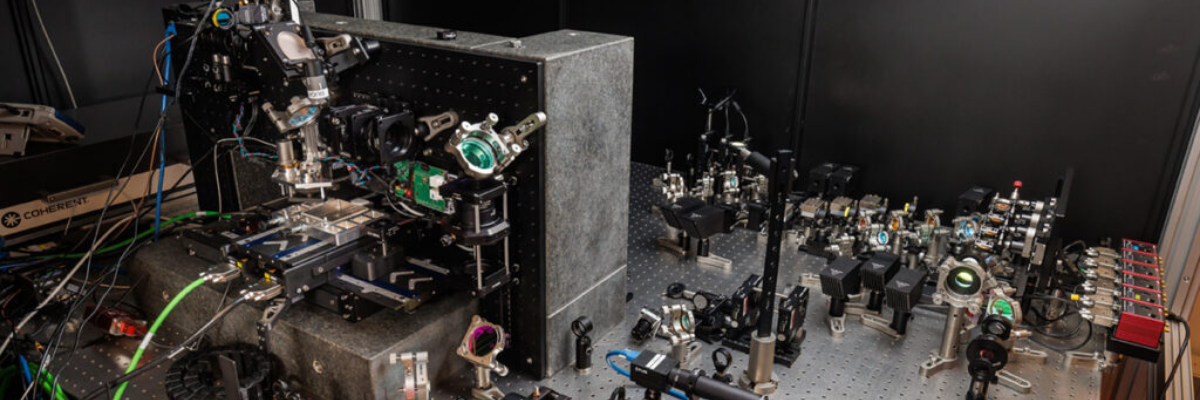
Reading the data is also becoming simpler. Earlier systems relied on multiple cameras and complex optical setups to decode the embedded patterns. The latest designs use a single optical system, reducing alignment complexity and making the overall architecture more practical.
It’s still a write-once medium, and it’s still slow compared to conventional storage. But Project Silica isn’t trying to replace SSDs or cloud object storage. It’s targeting a different layer of the stack entirely.
Rethinking Cold Storage
This is archival storage in the literal sense. It’s data that needs to be preserved, not accessed constantly. Think scientific records, cultural archives, medical imaging datasets, historical footage, or regulatory data that must remain intact for decades or longer.
Today, keeping that kind of data alive means keeping infrastructure alive with it. Data centers have to stay powered. Tape libraries have to be maintained. Media has to be recopied before it fails. That comes with energy costs, operational complexity, and a surprising amount of risk.
Glass changes the equation. Once the data is written, it requires no power, no cooling, and no maintenance. You can put it on a shelf. Or in a vault. Or underground. The medium itself becomes the archive.
From a systems perspective, that’s a fundamentally different model — one where storage durability is a materials problem, not a logistics problem.
Why Engineers Should Care
Project Silica is about expanding the design space for storage systems.
For engineers, it raises interesting questions:
-
What happens when archival storage no longer has an operational footprint?
-
How do system architectures change when data doesn’t need to be refreshed?
-
What new tradeoffs emerge when longevity is effectively solved at the material level?
Glass won’t replace silicon, but it doesn’t need to. It fills a gap that traditional electronics were never designed to handle: extreme longevity with zero upkeep.
In an industry obsessed with what’s next, Project Silica is quietly focused on what lasts. And sometimes, the most forward-looking engineering work doesn’t look futuristic at all. It looks like a piece of glass, sitting there, doing its job for the next ten thousand years.