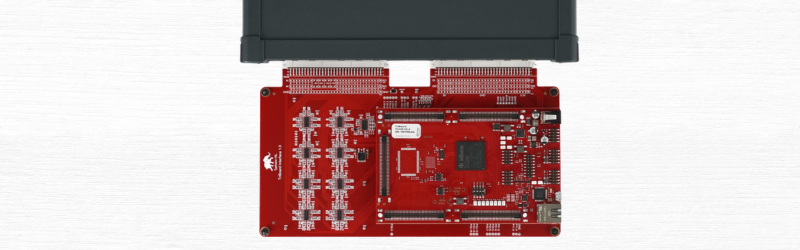

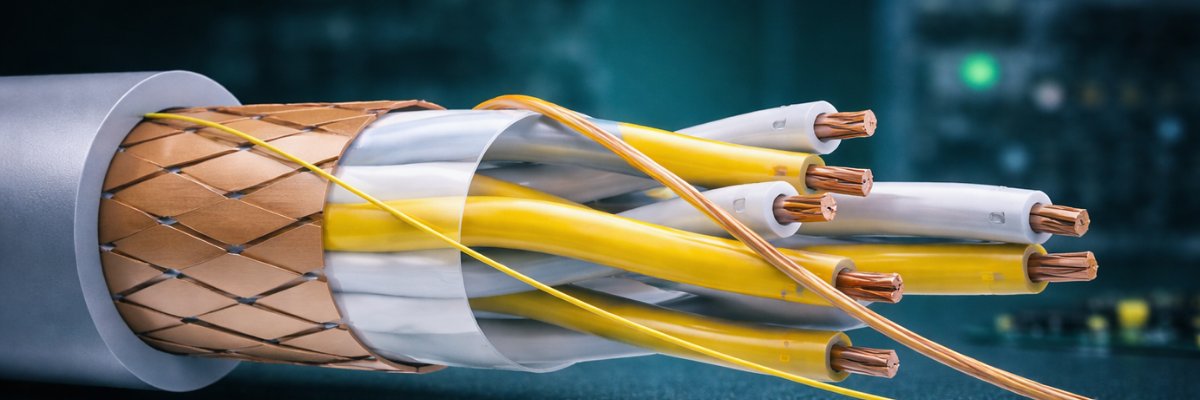


Pickering Interfaces has introduced a new line of PXI/PXIe fault insertion units (FIUs) built with MEMS switches, targeting high-bandwidth MultiGBASE-T1 automotive Ethernet testing. These modules are designed to meet the increasing demands of single-pair Ethernet systems in vehicles, which require higher data rates, tighter signal integrity, and greater durability than legacy switching technology.
The Technical Breakthrough
Conventional switching elements such as reed relays or electromechanical relays (EMRs) struggle when applied to MultiGBASE-T1 networks. Their switching speed, lifetime and signal performance become limiting factors in both simulation and test systems. Pickering’s new FIUs replace those legacy components with MEMS-based switching, offering much faster transition times, higher bandwidth support and vastly improved operational lifetimes.
Key features include:
-
Support for two-wire single-pair Ethernet standards up to 10 GBase-T1 and beyond
-
Low insertion loss, high signal fidelity and matched impedance channels optimized for high-speed communication
-
Channel counts and configurations compatible with modern PXI/PXIe test platforms, enabling fault insertion (open, short, route) in high-throughput test benches
-
Designed for high-cycle durability and reliability, reducing maintenance burdens in automotive production or validation environments
Why It Matters for Engineers
In system-in-loop (SIL), hardware-in-loop (HIL) and end-of-line test architectures, the integrity of signal switching and fault insertion directly impacts test speed, throughput and cost. With the new MEMS-based FIUs, test engineers gain:
-
Greater bandwidth headroom to support future automotive Ethernet standards
-
Higher throughput due to faster switching and fewer maintenance stoppages
-
Operational stability over long test cycles, reducing downtime and system calibration overhead
-
Simplified integration into existing PXI/PXIe racks, lowering the barrier to upgrade legacy test setups
Applications & Use Cases
The FIUs are tailored for the automotive sector—especially testing of ADAS networks, EV/HEV communication buses and emerging in-vehicle networks based on single-pair Ethernet. Beyond automotive, any system requiring high-speed, fault-insert capable, synchronized switching (e.g., aerospace, industrial networks, high-speed data links) will benefit.
Next Steps & Considerations
While the modules raise test-bench capabilities, system designers must still account for total system architecture: cabling, connector interfaces, calibration drift and integration with signal-tracking tools. MEMS switch behavior under different environmental and thermal conditions should be validated in the target deployment environment. However, the move to MEMS from legacy relays marks a clear shift in test infrastructure capability.
Learn More: New PXI/PXIe 10GBase-T1 MEMS Fault Insertion Switch | Pickering Interfaces