

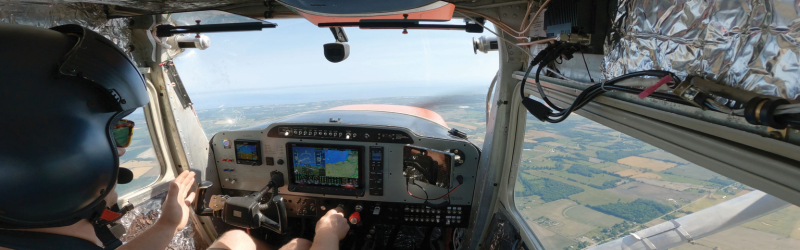
Autonomous aircraft are often portrayed as futuristic, high-cost projects that require building new airframes and systems from scratch. But Canadian startup Ribbit is proving that innovation in aviation doesn’t always mean starting over. Instead, Ribbit is retrofitting small, existing aircraft with safety-critical autopilot software—software that wouldn’t be possible without a rigorous testing backbone provided by Parasoft.
What makes this partnership noteworthy isn’t just the technical success but the broader implications for how safety-critical systems are built, validated, and brought to regulators and customers with confidence.
Software-First Approach in a Hardware-Heavy Industry
Aviation is a sector where trust is earned through redundancy, regulation, and years of incident-free performance. Ribbit’s decision to retrofit affordable, proven aircraft with its autonomy stack—written in C++ for maximum control and reliability—shows a pragmatic shift: focus on what’s already working in hardware, and pour innovation into the software.
The challenge? Convincing authorities like Transport Canada that these retrofitted systems are just as safe, if not safer, than conventional piloted flights. That’s where Parasoft enters the picture.
Testing as a Competitive Edge
Parasoft’s AI-driven C/C++ testing solutions help Ribbit enforce coding standards like MISRA and JSF from the earliest stages of development. By building automated compliance and testing into continuous integration (CI) pipelines, Ribbit has achieved an impressive 95% test coverage and 100% standards compliance.
These validated processes have helped Ribbit secure multiple government contracts worth over a million dollars each, while also obtaining Canada’s Special Flight Operations Certificate (SFOC) approvals to conduct unmanned test flights.
In other words, testing isn’t slowing Ribbit down; it’s become their accelerator.
“Proven With Use”
One of the most intriguing elements of Ribbit’s strategy is its incremental approach to autonomy. Instead of leaping straight to unmanned operations, the company deploys its systems with onboard safety pilots before shifting to remotely supervised flights. This “proven with use” methodology generates real-world data, builds regulator trust, and keeps engineers grounded in reality rather than simulation alone.
The result is a development process that balances innovation with caution—a balance the aerospace industry has often struggled to strike.
Broader Impact
Ribbit’s work isn’t just about delivering packages more efficiently. It’s about demonstrating that modern, agile software practices can coexist with the uncompromising demands of safety-critical industries. Civilian cargo delivery, defense logistics, and humanitarian aid in remote areas are all potential beneficiaries of this model.
By showing that rigorous automation and compliance can fit into fast-paced engineering workflows, Ribbit and Parasoft are challenging long-held assumptions about how slowly aerospace innovation has to move.
Looking Ahead
Tomorrow’s joint webinar between Parasoft and Ribbit, “A Modern Approach to Balancing Innovation and Safety in Autonomous Flights,” will likely expand on this theme: that the future of autonomous aviation won’t be defined only by radical new aircraft, but also by smarter, leaner approaches to testing and validation.
If Ribbit’s trajectory is any indication, the industry may be on the cusp of a new era—one where smaller players can move fast, win contracts, and still meet the world’s highest safety bars.
Additional Resources
· Ribbit Case Study: How Ribbit’s Safety-First Approach Secures $1M+ in Government Contracts
· Parasoft and Ribbit Webinar: A Modern Approach to Balancing Innovation and Safety in Autonomous Flights.