



ROHM Semiconductor has announced the launch of the TLR1901GXZ, an ultra-compact CMOS operational amplifier (op amp) designed to deliver the industry’s lowest operating circuit current. Optimized for use as a sensing amplifier, the new device is targeted at space-constrained, battery-driven applications such as handheld measurement instruments, wearable devices, and indoor motion detectors.
As the need for miniaturized, energy-efficient sensors continues to grow across consumer and industrial devices, amplifiers that boost weak sensor signals must also achieve lower power consumption and higher accuracy. ROHM’s latest op amp leverages the company’s Nano Energy™ technology along with advances in process and packaging to meet these demands.
The TLR1901GXZ achieves an operating current of just 160nA (typ.), extending battery life in mobile and IoT devices, while adopting a WLCSP (Wafer Level Chip Scale Package) footprint of under 1mm² for high-density mounting. The device also offers an exceptionally low input offset voltage of 0.55mV (max.), approximately 45% lower than typical market alternatives, ensuring precise performance across a wide temperature range.
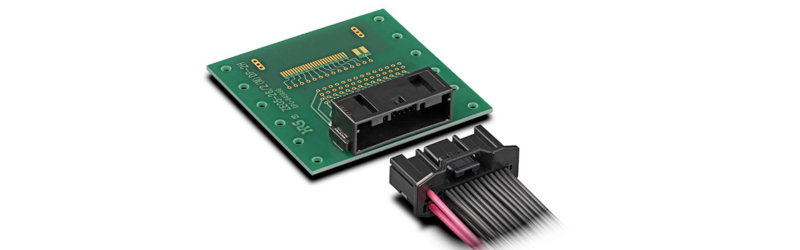
To provide design flexibility, the op amp can be paired with ROHM’s ultra-compact general-purpose resistors, including the MCR004 (0402 mm / 01005 in) and MCR006 (0603 mm / 0201 in) series, which support sustainable and high-density designs. An evaluation board (TLR1901GXZ-EVK-001) is also available for rapid prototyping.
Applications
-
Consumer devices: wearables, smart devices, motion sensors
-
Industrial equipment: gas detectors, fire alarms, handheld measurement instruments, environmental IoT sensors
Availability
The TLR1901GXZ is available now through online distributors DigiKey and Mouser.
Applicable Part No: TLR1901GXZ-E2
Adapter Board: TLR1901GXZ-EVK-001
About Nano Energy™ Technology
ROHM’s proprietary Nano Energy™ technology reduces power consumption to the nano-ampere range through advanced circuit design, layout, and process innovation. This contributes to extending the operating life of battery-powered IoT and mobile devices, while also improving energy efficiency in industrial and automotive systems.