

Imagine an antenna that embeds intelligence in its flexibility: stretch, twist, or compress it—and suddenly it speaks in a different frequency band. That’s exactly what a team at MIT has created, with a shape-changing antenna that rewrites how a single element adapts to changing communication and sensing needs.
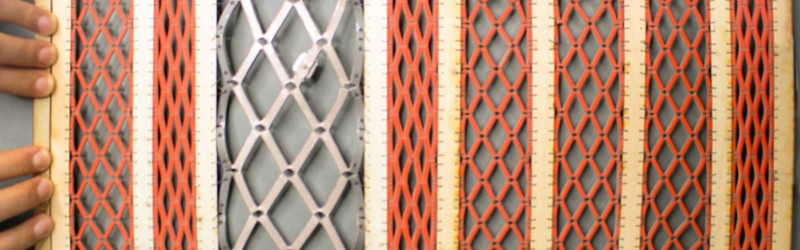
Traditional antennas may evoke images of rigid rods, but MIT’s version is based on auxetic metamaterials, smart structures whose geometry, not just the material, dictates performance. By mechanically deforming this lattice-like antenna, engineers can tune its resonance characteristics on the fly: different shapes produce different frequency responses, all reversible and without electronics or motors.
This addresses real design challenges. In applications that span wearables, AR tracking, or multi-standard communication devices, engineers often layer multiple antennas to hit distinct frequency bands. The MIT approach eliminates that redundancy. A single antenna, flexed into different shapes, can handle multiple roles—reducing parts, board space, and cost.
Designers might bend it gently to detect airflow or monitor breathing—or flatten it to switch into a Wi-Fi-like mode. It’s a simple interface where mechanical deformation replaces complex control logic. The team rounded out the concept with a user-friendly editing tool, enabling custom antenna designs that users can fabricate using laser cutters.
Lead author Marwa AlAlawi puts it succinctly: the antenna leverages its geometry to change properties, avoiding the need to fabricate multiple static structures. And uniquely, those changes in RF response due to shape shifts can double as sensing signals—opening up possibilities for form-driven interaction design.
From an engineering perspective, this concept aligns neatly with the push toward multifunction, reconfigurable systems: less hardware, more adaptability. Imagine smart clothing that changes how it communicates based on movement, or sensors built into soft robotics that tune themselves by how they fold. This idea turns every stretch, every bend, into purposeful function.
MIT’s shape-changing antenna gives new meaning to flexibility—in both structure and performance. It’s a clever reminder that sometimes the most elegant engineering isn’t adding complexity—but bending the problem itself until it fits.
Original Story: A shape-changing antenna for more versatile sensing and communication | MIT News | Massachusetts Institute of Technology