


Power is starting to become a real constraint in data centers. Not just how much is available, but how efficiently it gets used once it’s inside the system.
Most data centers distribute power at around 48 volts. That works well for moving energy across racks. The problem is that GPUs and processors don’t run anywhere near that. They typically need something closer to 1 to 5 volts.
So every system depends on converters to step that voltage down. It sounds straightforward, but this is where a lot of energy gets lost.
The 48V to Low-Voltage Reality
These converters sit between the power supply and the chips, working constantly in the background. As systems take on more compute, especially with AI workloads, they are being pushed harder.
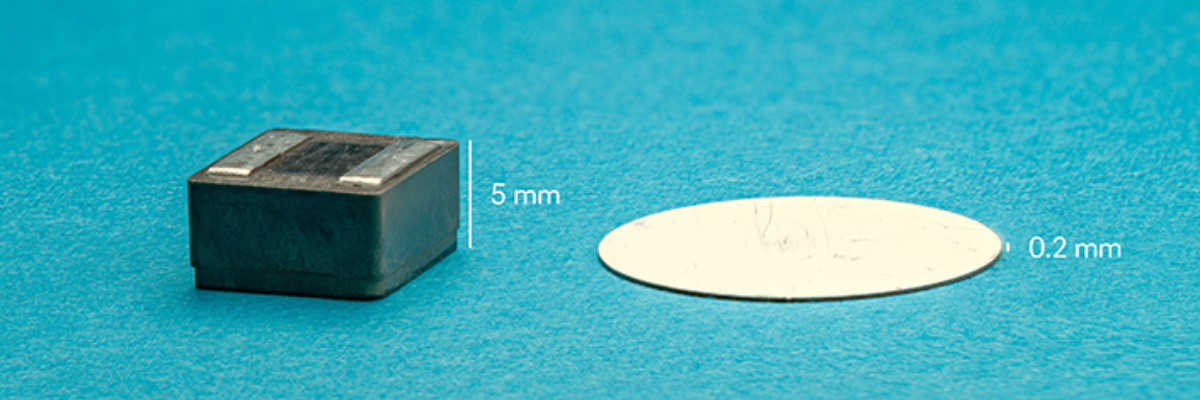
Traditional designs rely on inductors. These are magnetic components that store and release energy during conversion. They have been refined over time, but they are not easy to shrink, and they do not handle large voltage drops as cleanly as systems now require.
As efficiency drops, that energy turns into heat. And heat is already one of the biggest problems inside a data center.
Moving Energy Without Magnetics
This new design takes a different approach.
Instead of using an inductor, it uses a piezoelectric resonator. When voltage is applied, the material physically vibrates. That motion is used to move energy through the system.

What makes this design stand out is how it is built around that idea. Capacitors are arranged to create multiple paths for energy flow, which helps manage the step down from 48 volts to much lower levels more efficiently.
What the Prototype Shows
In testing, the chip stepped 48 volts down to 4.8 volts, which lines up with what many data center components need.
It reached a peak efficiency of just over 96 percent.
This kind of conversion happens across every rack, every system. Even small improvements at this stage reduce wasted energy and help keep temperatures under control.
Where This Fits
Power conversion sits in the middle of everything. Every processor depends on it, and every inefficiency adds up in the form of heat and power loss.
A design like this could help reduce both, especially as systems continue to pack in more compute.
Not Ready Yet, But Worth Watching
This is still a prototype. It is not something that can be dropped into existing systems today.
There are still questions around scaling, integration, and how it performs under real operating conditions.
But it shows a different direction. Instead of pushing the same components further, it rethinks how power conversion is handled at a basic level.