

Off-highway vehicles are being asked to do more than move earth, lift loads, or harvest crops. They are now expected to report their location, log operating hours, track component health, and alert operators before a failure takes a machine offline. Connectivity and telematics have become part of the job description.
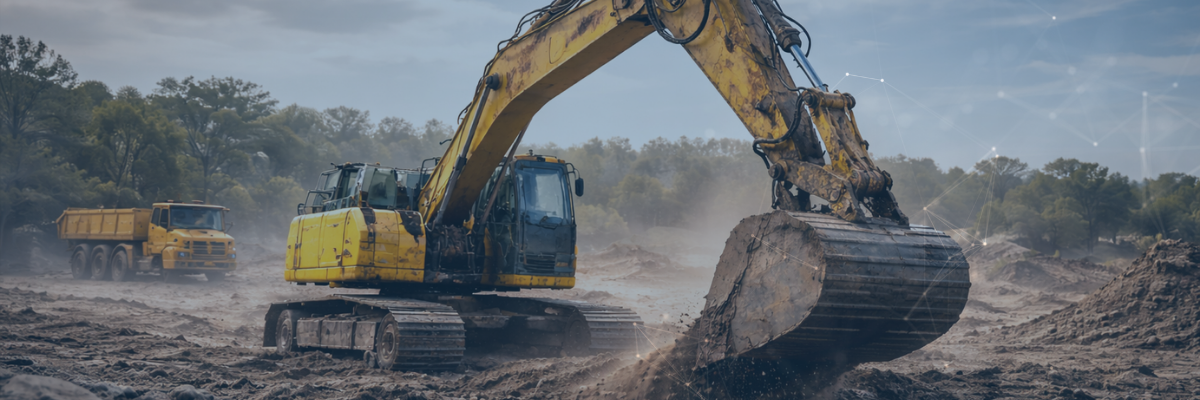
A modern excavator or wheel loader may carry dozens of sensors monitoring hydraulic pressure, oil temperature, vibration, fuel consumption, and structural load. That data is fed to onboard controllers in real time, displayed in the cabin for the operator, and transmitted off the vehicle to fleet management systems. Construction firms use this information to track assets across job sites. Equipment manufacturers use it to understand how machines are actually being used in the field and where failures tend to occur.
None of this works without reliable electrical and RF connectivity across machines that are large, mechanically complex, and exposed to constant vibration, dust, moisture, and temperature swings. Designing that connectivity is becoming one of the more demanding parts of off-highway vehicle development.
Connecting Subsystems That Move, Flex, and Rotate
Unlike passenger vehicles, off-highway machines rarely have tidy, centralized layouts. Sensors and electronic modules are often mounted on boom arms, articulated joints, lift mechanisms, or trailing implements. A pressure sensor on a hydraulic line at the end of a boom arm may be several meters away from the main controller, with cables routed through pivot points that move continuously during operation.
Maintaining stable power and signal connections in these locations is not trivial. Connectors must tolerate constant flexing and shock while maintaining contact integrity. Cable routing must account for mechanical strain, abrasion, and proximity to high-current lines driving motors and pumps. Intermittent signal loss in these systems does not just cause nuisance faults. It can disable safety features or produce misleading data that undermines predictive maintenance models.
The Cabin as an Electronics Convergence Point
The cabin has evolved into the electronic center of the vehicle. Digital instrument clusters, touchscreen displays, telematics gateways, cameras, and control units all converge in a relatively small space. Data from distributed sensors flows into the cabin over multiple networks, often including CAN, Ethernet, and proprietary links.
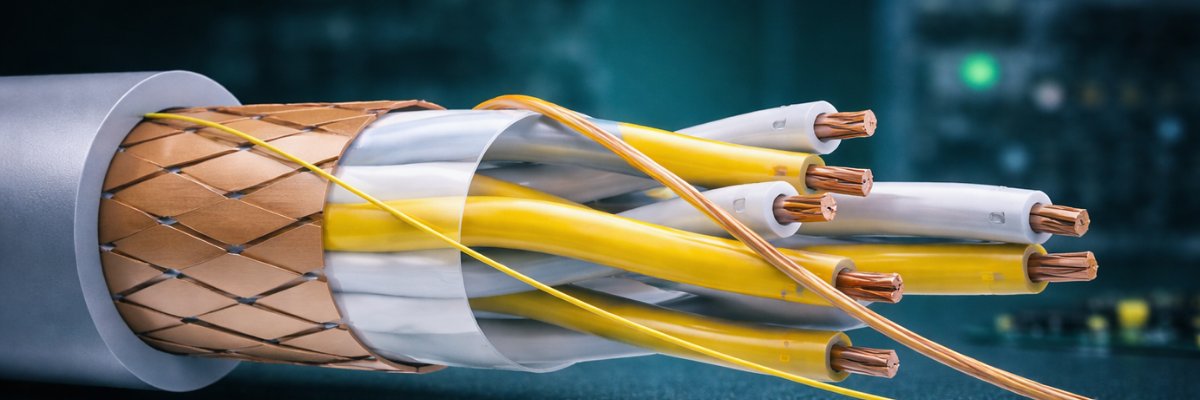
This concentration creates its own design challenges. Connectors must support higher pin counts and mixed signal types while fitting into tight packaging constraints. Shielding and grounding become critical as noisy power electronics share space with sensitive communication lines. Service access also matters, as downtime on a job site is expensive and connectors must allow for fast diagnostics and replacement.
RF Links for Tracking and Monitoring
Wireless connectivity fills gaps where running cables is impractical. GNSS modules support asset tracking and geofencing, allowing fleet managers to monitor where machines are and how long they spend at each site. Tire pressure monitoring systems rely on RF links to transmit data from rotating wheels or remote axles. Short-range wireless sensors are increasingly used in locations where wiring would be exposed to damage.
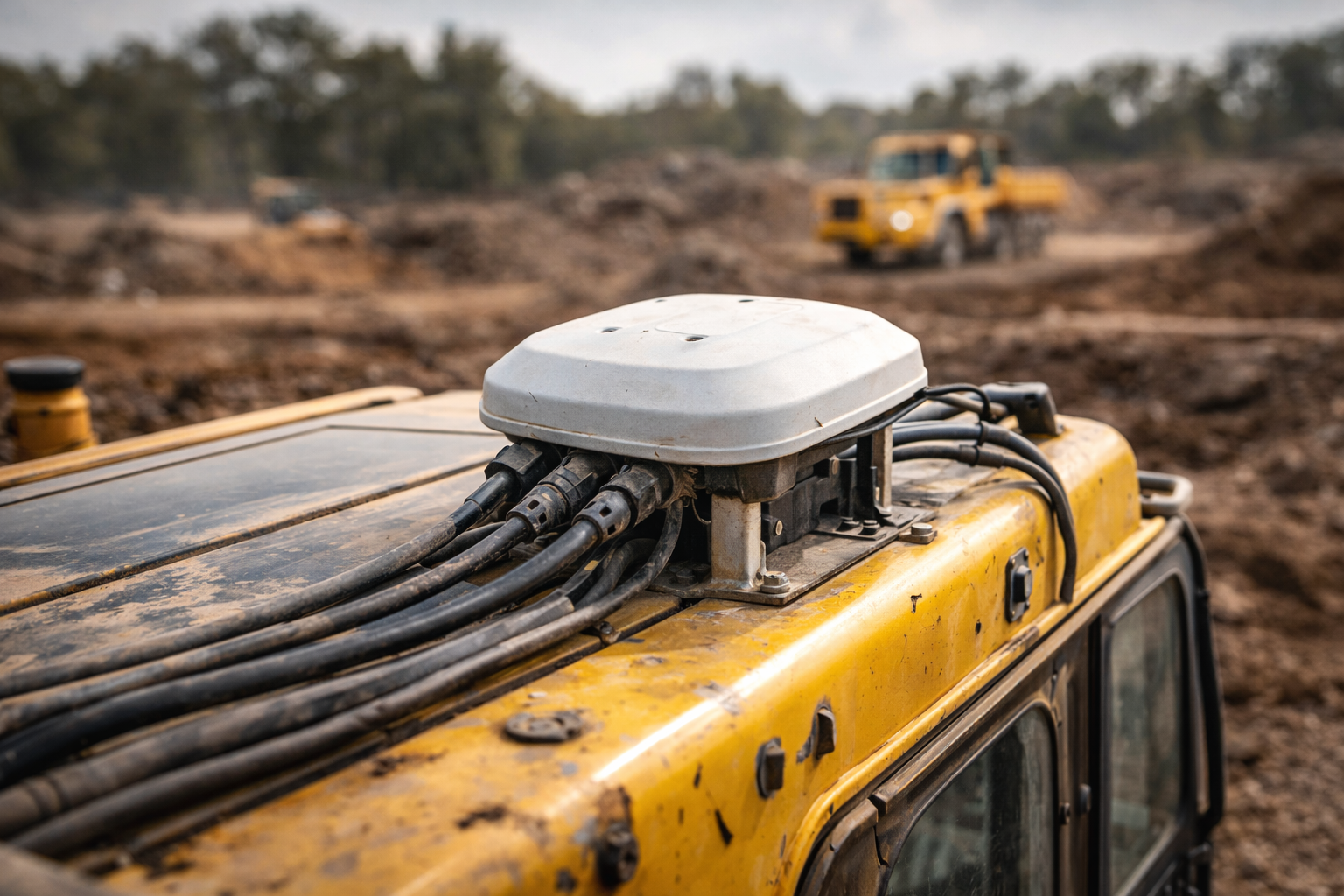
Rugged RF connectors capable of supporting frequencies up to 11 GHz are well suited for these applications. At those frequencies, maintaining impedance control and shielding is just as important as mechanical durability. Poor RF connections can lead to dropped telemetry, inaccurate location data, or intermittent sensor reporting that is difficult to diagnose in the field.
Designing for Predictive Maintenance, Not Just Operation
Predictive maintenance depends on long-term data consistency. A vibration sensor that reports clean data for six months and then degrades due to a corroded connector can produce misleading trends. Over time, small reliability issues at the interconnect level can erode confidence in the entire telematics system.
For engineers, this means connectors are no longer an afterthought. Sealing, material selection, mating cycles, and environmental ratings directly affect data quality over the life of the machine. In off-highway environments, connectors must survive mud, chemicals, pressure washing, and years of mechanical stress without compromising performance.