





Construction equipment has never been subtle. Progress in the field has always been measured in tonnage, torque, and durability—bigger engines, tougher hydraulics, stronger steel. Intelligence, when it appeared at all, lived quietly in the background as diagnostics software or fleet-tracking tools.
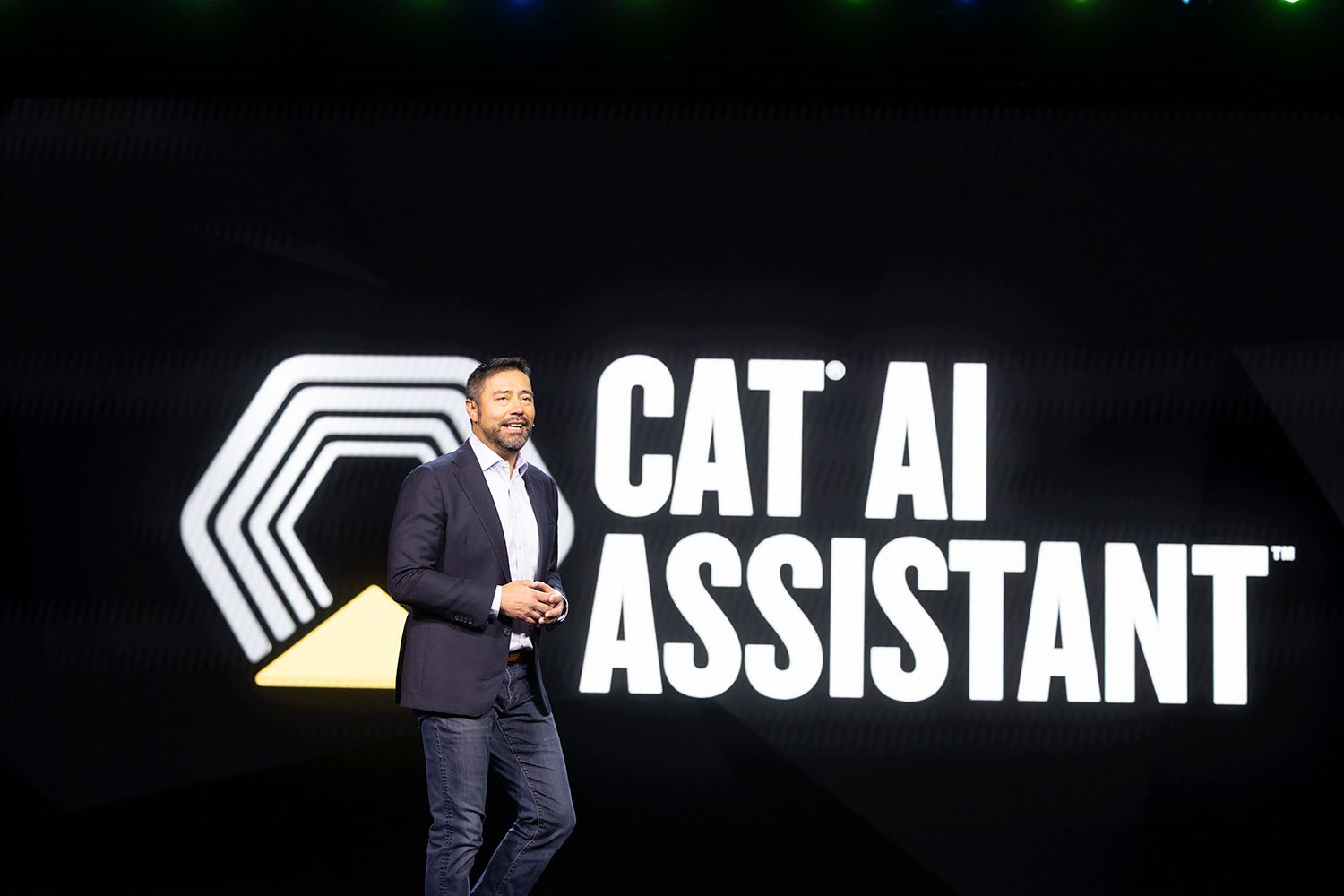
At CES this year, Caterpillar suggested a different future. This future is one where intelligence moves closer to the operator and autonomy becomes a working partner rather than a distant goal. The company introduced an expanded push into AI-assisted and autonomous construction vehicles, emphasizing not just automation, but operator efficiency and safety.
It is a subtle shift in framing, but an important one. Rather than positioning autonomy as a replacement for human control, Caterpillar is treating AI as a system that works with operators inside machines that remain unmistakably physical.
Autonomy in a World That Refuses to Sit Still
Unlike highways or warehouses, construction sites are rarely predictable. Terrain changes daily. Equipment moves in close proximity to people. Weather, dust, and debris interfere with sensors. These conditions make full autonomy difficult and explain why construction has historically lagged behind automotive automation.
Caterpillar’s approach reflects that reality. Instead of promising fully autonomous machines everywhere, the company is deploying task-specific autonomy and AI assistance in areas where it can reliably reduce risk and improve productivity. Examples include autonomous hauling, semi-autonomous digging, obstacle detection, and AI-driven operator guidance.
In these systems, AI does not remove the human from the loop. It reduces cognitive load by monitoring surroundings, flagging hazards, optimizing motion paths, and stepping in where reaction time matters most.
This hybrid model aligns closely with how autonomy actually arrives in industrial environments: incrementally, and only where it proves itself.
The Cab as a Human-Machine Interface
One of the most significant changes is happening inside the cab.
Modern Caterpillar vehicles increasingly resemble mobile control rooms, with displays, sensors, and AI systems working together to present information at the right moment. The company’s AI assistant concepts focus on alerting operators to unsafe conditions, suggesting corrective actions, and reducing reliance on constant manual monitoring.
From an engineering standpoint, this represents a move away from purely mechanical feedback like vibration, sound, resistance and toward software-mediated situational awareness. Cameras, radar, LiDAR, and onboard analytics combine to create a richer understanding of the environment than a single human operator could maintain alone.
The challenge, as always, is trust. Operators must believe that the system is accurate, timely, and consistent. Over-alerting can be as dangerous as under-alerting. Caterpillar’s emphasis on operator efficiency suggests careful tuning—not just of algorithms, but of how information is delivered.
Safety as a Design Constraint, Not a Feature
Caterpillar has long marketed safety as a core value, but AI changes what safety engineering looks like. Instead of relying solely on physical safeguards, designers must now account for perception accuracy, sensor fusion, and decision latency.
Autonomous and AI-assisted construction vehicles must detect people, predict motion, and respond under imperfect conditions. Dust clouds, low light, and partial occlusion all stress perception systems. Designing AI that fails safely, and predictably, becomes as important as peak performance.
This is where Caterpillar’s incremental autonomy strategy matters. By deploying AI first in constrained tasks, engineers can validate performance in the real world, gather data, and refine systems before expanding autonomy further.
A Broader Shift in Heavy Industry
Caterpillar’s CES presence reflects a broader trend: traditionally mechanical industries are becoming software-defined systems.
The engines, hydraulics, and frames still matter. But increasingly, differentiation comes from how machines sense, interpret, and respond to their environment—and how effectively they communicate with human operators.
For engineers, this means construction equipment now sits at the intersection of mechanical design, embedded systems, AI, and human-machine interaction. The skills required to build and maintain these machines are changing accordingly.
Caterpillar is not claiming that construction sites will soon run themselves. Instead, it is acknowledging something more practical: intelligence works best when it augments human expertise rather than attempting to replace it.
In an industry built on control and reliability, that may be the most realistic—and most powerful—form of autonomy yet.


