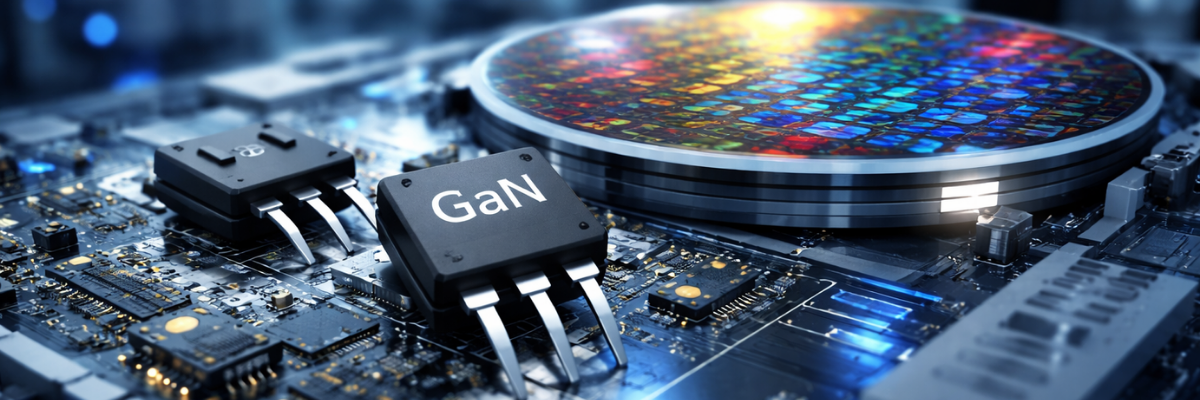

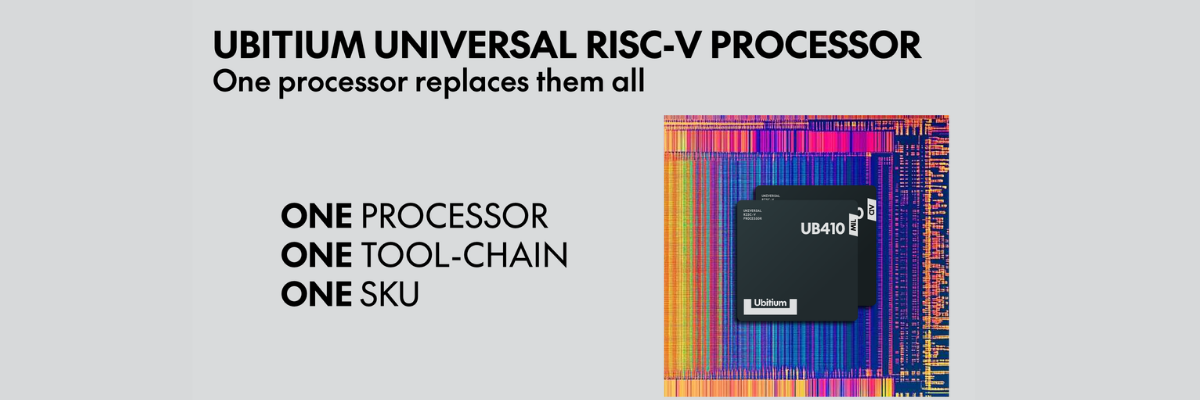
A German semiconductor start-up is proposing a different path forward for embedded computing—one that could reduce the growing complexity engineers face when designing modern electronic systems. Ubitium recently announced the tape-out of its first silicon implementing what it calls a universal microprocessor architecture, fabricated on Samsung Foundry’s 8 nm process.
The milestone represents the first hardware implementation of Ubitium’s concept: a single RISC-V–based processor designed to consolidate workloads that are typically handled by multiple specialized chips.
When Embedded Systems Become Too Complex
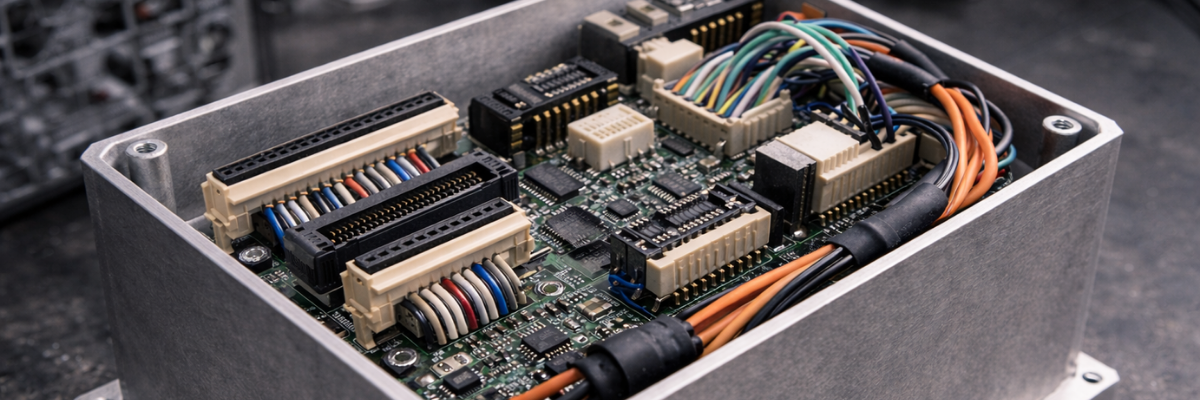
The embedded computing market is valued at roughly $115 billion, but the architecture of many embedded systems has grown increasingly fragmented. Modern products—from vehicles to industrial machines—often rely on stacks of different processors and accelerators. Automotive platforms illustrate the trend clearly. Early electronic control systems might have used a single processor, while today’s vehicles can contain more than 200 microcontrollers, DSPs, and accelerators distributed across subsystems.
Each device typically brings its own software environment, toolchain, and vendor ecosystem. While this approach has delivered performance gains over time, it has also created significant integration overhead.
That complexity becomes more pronounced as embedded applications expand into AI-enabled workloads such as robotics, autonomous machines, and intelligent sensing systems.
Ubitium’s architecture is built around the idea that consolidation—not additional specialization—may be the next step for embedded compute.
Extending RISC-V Beyond the CPU
At the center of the company’s approach is the open RISC-V instruction set architecture, which has already been adopted across billions of devices worldwide. Instead of using RISC-V as a conventional CPU core alongside dedicated accelerators, Ubitium’s design attempts to extend the architecture so that a single processor can perform multiple classes of workloads.
The processor can simultaneously support Linux and real-time operating systems, while handling tasks typically assigned to separate hardware blocks—such as signal processing, audio processing, and neural network inference at the edge.

According to the company, the chip maintains compatibility with existing RISC-V software toolchains and development frameworks. The goal is to eliminate the need for specialized compilers, proprietary programming environments, or dedicated accelerator hardware.
“This tape-out turns a long-held thesis into silicon,” said Martin Vorbach, CTO of Ubitium. “Embedded workloads have outgrown the architectures the industry relies on today. Consolidation isn’t optional anymore. It’s inevitable.”
A Reconfigurable Approach to Compute
The architecture is built around what Ubitium calls a Universal Processing Array, designed to dynamically shift execution modes during operation. Instead of assigning fixed functions to different cores, the processor can adapt its resources at runtime to behave like a CPU, DSP, GPU-style parallel engine, or AI accelerator.
This approach draws comparisons to the evolution of software-defined radio, where reconfigurable hardware replaced fixed-function signal-processing circuits.
If successful, the design could allow a single processor to cover workloads such as radar signal processing, real-time audio analysis, computer vision pipelines, and AI inference—all on the same silicon die.
For system designers, the implications could extend beyond performance. Consolidating multiple compute elements into one processor may simplify board layouts, reduce bill-of-materials cost, and streamline product qualification cycles.
Industry Partnerships Behind the First Silicon
The initial silicon implementation was developed in collaboration with several semiconductor ecosystem partners. The chip was fabricated using Samsung Foundry’s 8 nm process, while Siemens Digital Industries Software provided design verification tools and ADTechnology supported implementation and back-end design.
Samsung sees the architecture as part of a broader industry shift toward flexible computing platforms.
“The shift toward software-defined, reconfigurable compute is accelerating,” said Taejoong Song, vice president and head of Foundry Technology Planning Team at Samsung Electronics. “Ubitium’s approach—one universal processor replacing multiple specialized chips—aligns with where we see embedded systems heading.”
Verification tools also played a role in the development cycle. Ubitium used Siemens’ Veloce CS hardware-assisted verification system to simulate workloads and validate system behavior before fabrication.
The Road Ahead
The first tape-out validates key components of the architecture, including the Universal Processing Array and an LPDDR5 memory interface. Ubitium plans a second tape-out later this year as the design moves closer to production.
Volume manufacturing is currently targeted for 2027.
If the concept gains traction, it could represent a shift in how embedded systems are architected. Instead of layering CPUs, DSPs, GPUs, and AI accelerators into increasingly complex SoCs, future systems might rely on a single adaptable compute platform capable of shifting roles in real time.
For engineers designing next-generation embedded products—particularly those combining real-time control, sensor processing, and AI workloads—that type of consolidation could significantly simplify system design.