

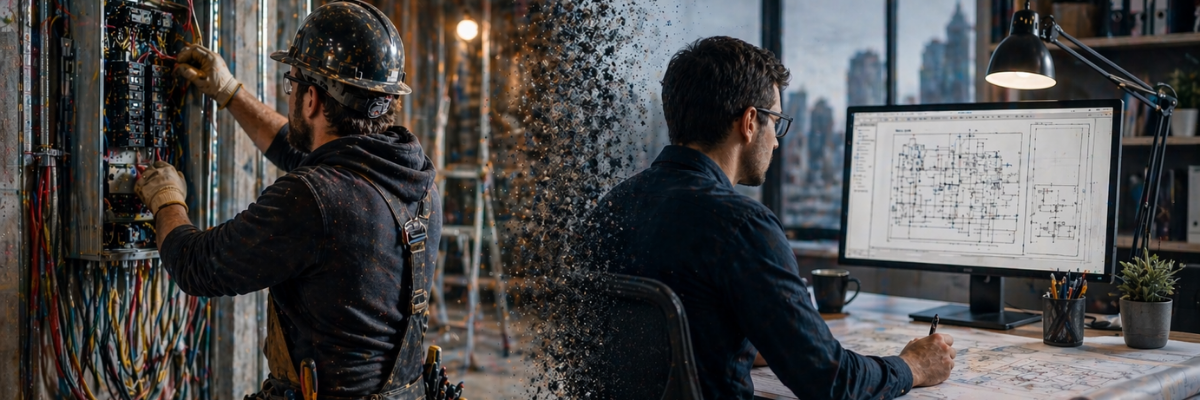
Most people don’t think of electrician and electrical engineer as part of the same path. One is hands-on, the other is design-focused and academic. But in one discussion found on Reddit, a surprising number of people had done exactly that—started in the field and later moved into engineering.
Most of them didn’t plan it from the start. Some went back to school after years in the field. Others made the decision once they realized the physical side of the job wasn’t something they wanted to keep doing.
The physical toll came up a lot. Working in tight spaces, dealing with heat or cold, long days on your feet. The move into engineering didn’t remove the workload, but it changed what wears you down. Instead of being physically exhausted, the fatigue becomes mental. More time sitting, more time focused, more time working through problems that don’t have quick answers.
The schedule is different too. Electricians can make good money, especially with overtime, but that usually means longer hours and less control over your time. Engineering work tends to be more consistent. Fewer late nights, more predictable days, and sometimes the option to work from home. For a lot of people, that mattered just as much as pay.
The work environment takes some getting used to. Job sites are loud and direct. You’re working with the same people, solving problems as they come up, and you can see what you finished at the end of the day. Office work is quieter and slower in a different way. Projects take longer. Progress isn’t always visible right away. Some people prefer that. Others don’t.
One thing that showed up consistently is that people coming from the trades don’t start from zero. They already understand how systems come together. In school, that made labs easier to get through. Later on, it helped when working with technicians or reviewing designs. They could spot issues that might not stand out on paper.
That background still matters on the job. Engineers who have worked in the field tend to think about installation and maintenance differently. They’re less likely to design something that’s difficult to build or unrealistic to maintain. It also changes how they communicate with electricians and techs. There’s less back-and-forth because they already understand the constraints.
The transition itself isn’t easy. Electrical engineering still requires a strong foundation in math and physics. Several people mentioned struggling with coursework, especially after being out of school for a while. The hands-on experience helps with context, but it doesn’t replace the academic side.
Not everyone prefers the change. Some people miss working with their hands or being active during the day. A few mentioned looking for roles that keep them closer to physical systems, like controls or industrial positions, where they can still work with equipment instead of only designing it.
The path isn’t as separate as it looks from the outside. People move between these roles more often than expected. The decision usually comes down to what kind of work someone wants to do every day and what they want their schedule to look like over time.