


Relays have been part of electrical systems for well over a century, and despite advances in semiconductors and solid-state switching technologies, they continue to play an important role in modern designs. Industrial controls, automotive electronics, power distribution systems, and embedded devices still rely on relays for one major reason: they remain an effective way to isolate and control electrical loads.
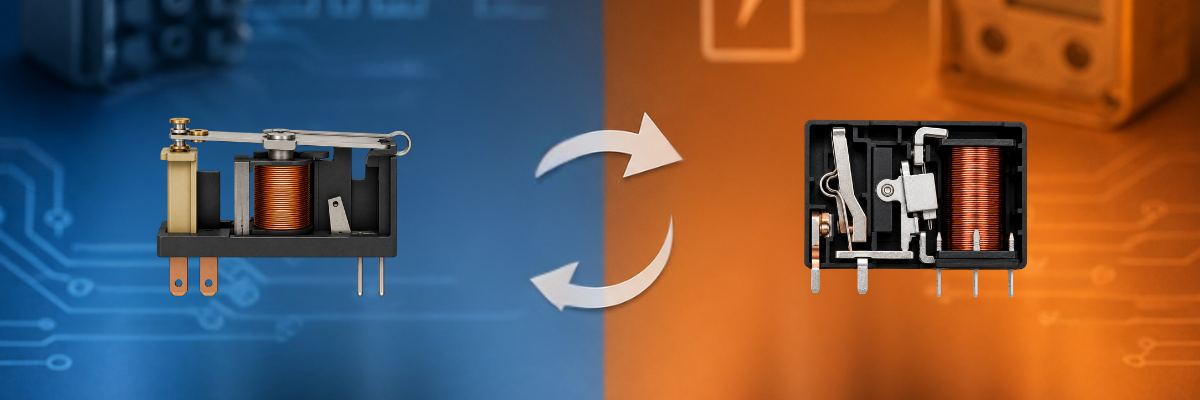
But selecting a relay is not always as straightforward as matching voltage and current ratings. One decision that can affect everything from power consumption to system recovery behavior is whether the design uses a latching or non-latching relay.
At first glance, the difference appears simple. One remembers its state while the other does not. In practice, that distinction can influence how an entire system behaves.
The Question Is Not “What Does It Switch?” but “What Happens Next?”
Many relay decisions begin with load requirements. Engineers look at current ratings, contact configurations, switching speeds, and environmental conditions. Those factors matter, but they do not tell the full story.
A more revealing question is often: What should happen after the switching event occurs?
Consider two different scenarios.
A remote environmental monitoring device installed on a pipeline may wake periodically, collect sensor data, transmit information, and return to sleep. Every milliwatt matters because the system may rely on batteries or energy harvesting for years of operation.
Now compare that with an emergency shutoff system controlling industrial equipment on a factory floor. In this case, preserving battery life is not the highest priority. If power disappears unexpectedly, the system should immediately move into a safe state.
Both systems may switch similar electrical loads. Their relay requirements, however, are very different.
When Holding Power Becomes a Design Constraint
Traditional non-latching relays work by continuously energizing a coil to maintain a switched state. Remove the control signal, and internal mechanisms return the contacts to their original position.
For many applications this behavior is useful because the relay naturally returns to a known condition.
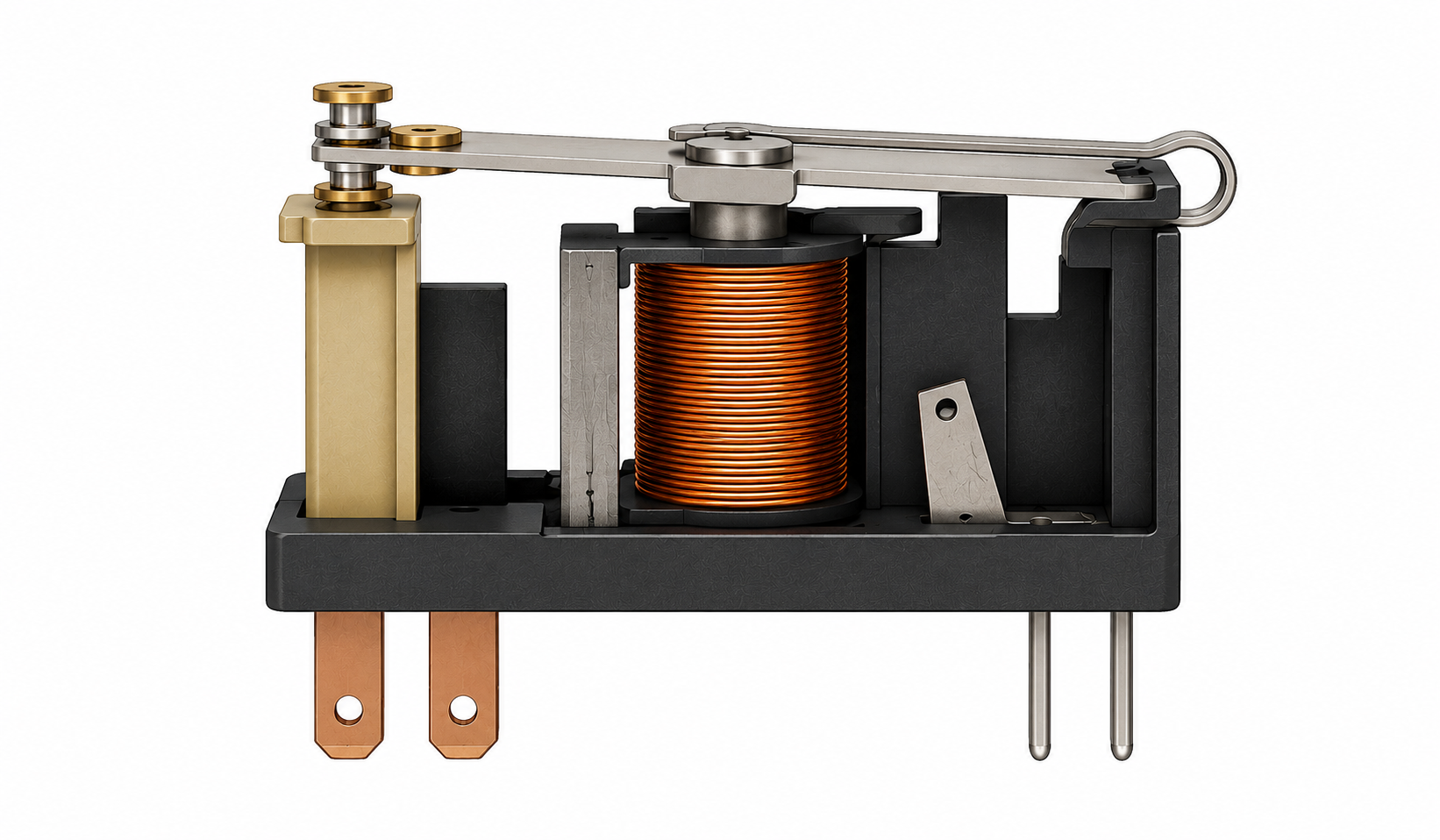
Motor controls often benefit from this approach. If power is lost, equipment stops. Industrial safety systems frequently rely on similar behavior. The relay does not need additional instructions to determine what should happen during an interruption—it automatically resets itself.
The tradeoff is energy consumption.
Keeping a relay active means continuously supplying current to the coil. In systems connected to wall power, that consumption may be insignificant. In battery-powered equipment, however, maintaining relay state can become a noticeable part of the overall power budget.
As connected devices move into more remote environments, designers increasingly pay attention to every source of power loss—even small ones.
Remembering Can Save Power
Latching relays approach the problem differently.
Rather than requiring constant energy to maintain a position, they need power only when switching states. After receiving a command, the relay remains where it was placed until another signal tells it to move again.
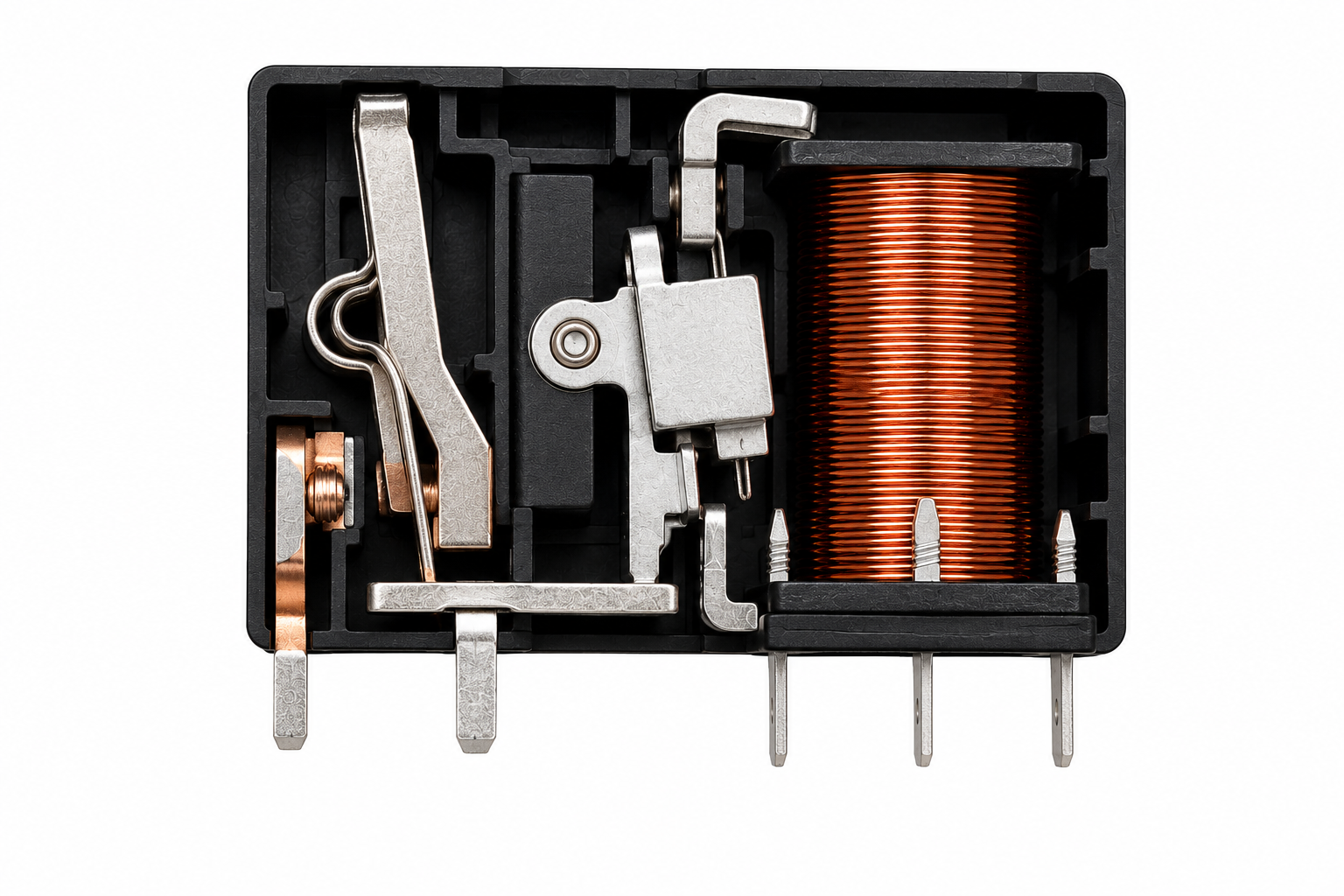
Think of it less as a spring-loaded light switch and more as a traditional wall switch. Once flipped, it stays there.
For systems that spend long periods idle, this characteristic can significantly reduce energy use.
Smart utility meters provide a common example. A relay may switch only occasionally during normal operation, making continuous coil power unnecessary. Remote sensors, portable equipment, and energy-conscious control systems can benefit for similar reasons.
The advantage is not limited to power savings. Retaining state can also help systems preserve operating conditions during temporary power interruptions.
Remembering Is Not Always Better
State retention sounds useful until the wrong condition gets remembered.
Imagine a machine that loses power unexpectedly and restarts with equipment still enabled because the relay preserved its previous state. Depending on the application, this behavior may create additional safety concerns or require more complex startup logic.
Designers sometimes intentionally want the opposite behavior. They want the system to forget.
That requirement becomes increasingly important in industrial environments where unexpected operation after a power restoration could create hazards.
This is why selecting a relay often becomes a larger system question rather than simply a component question.
Relay Choice Is Really a System Behavior Choice
The growing complexity of connected devices has shifted how engineers approach even familiar components.
A relay no longer exists only to switch a load on or off. It becomes part of a broader conversation about power efficiency, fault recovery, system safety, and user expectations.
In some applications, remembering is valuable. In others, forgetting is the safer decision.
The relay itself may seem like a small part of a design, but the choice between latching and non-latching behavior can determine what happens long after the switch has been flipped.