

The Arduino UNO Q is one of the biggest shifts in Arduino history. Unlike traditional Arduino boards that focus purely on microcontroller-based development, the UNO Q combines Linux computing with real-time embedded control in a single platform.
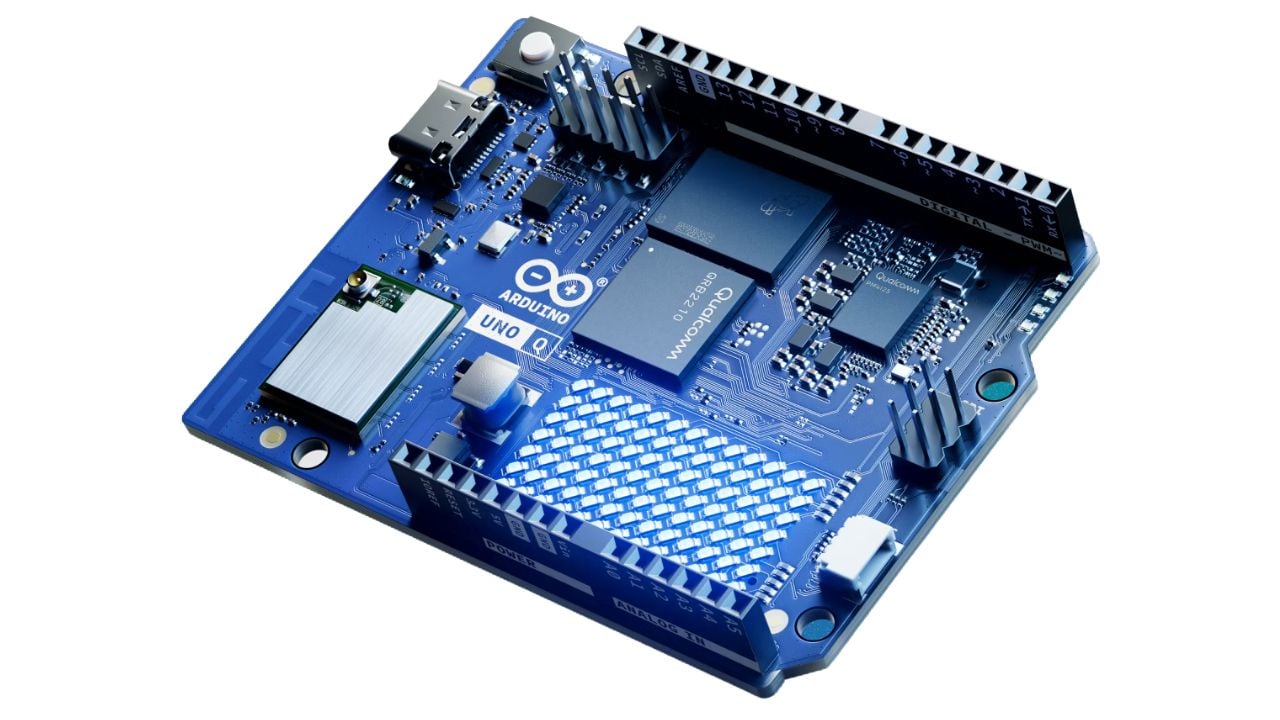
Powered by Qualcomm’s Dragonwing QRB2210 processor alongside an STM32U585 microcontroller, the board introduces what Arduino calls a “dual-brain” architecture. This allows developers to run Linux applications, AI models, Python scripts, and traditional Arduino sketches simultaneously.
That combination opens the door to projects that previously required both a single-board computer and a separate microcontroller. For engineers, makers, educators, and robotics developers, the UNO Q creates a new category of prototyping hardware that blends embedded systems with edge AI capabilities.
Here are some of the most exciting project ideas for the Arduino UNO Q.
AI-Powered Smart Camera System
One of the strongest applications for the UNO Q is machine vision.
Because the board can run lightweight AI models directly on-device, developers can build systems capable of:
- Object detection
- Facial recognition
- QR and barcode scanning
- Motion tracking
- Product inspection
Using a connected camera module, the UNO Q can process visual data locally without relying entirely on cloud computing. This enables faster response times and improved privacy for edge applications.
Potential use cases include:
- Smart security systems
- Automated inventory scanners
- Robotics navigation
- Industrial inspection systems
- Interactive kiosks
For electronics engineers exploring edge AI, this type of project demonstrates how embedded platforms are evolving beyond traditional sensor control.
Voice-Controlled Smart Assistant
The combination of Linux support and wireless connectivity makes the UNO Q ideal for voice-controlled systems.
Developers can build:
- Offline voice assistants
- Smart workshop controllers
- Voice-enabled automation systems
- AI-powered home interfaces
The onboard processing power allows speech recognition and command processing directly on the device rather than relying completely on external cloud services.
This type of project introduces several advanced development concepts:
- Embedded AI
- Audio processing
- Wireless communication
- Real-time system control
- Python integration
For makers transitioning into AI-assisted hardware design, this becomes an accessible entry point.
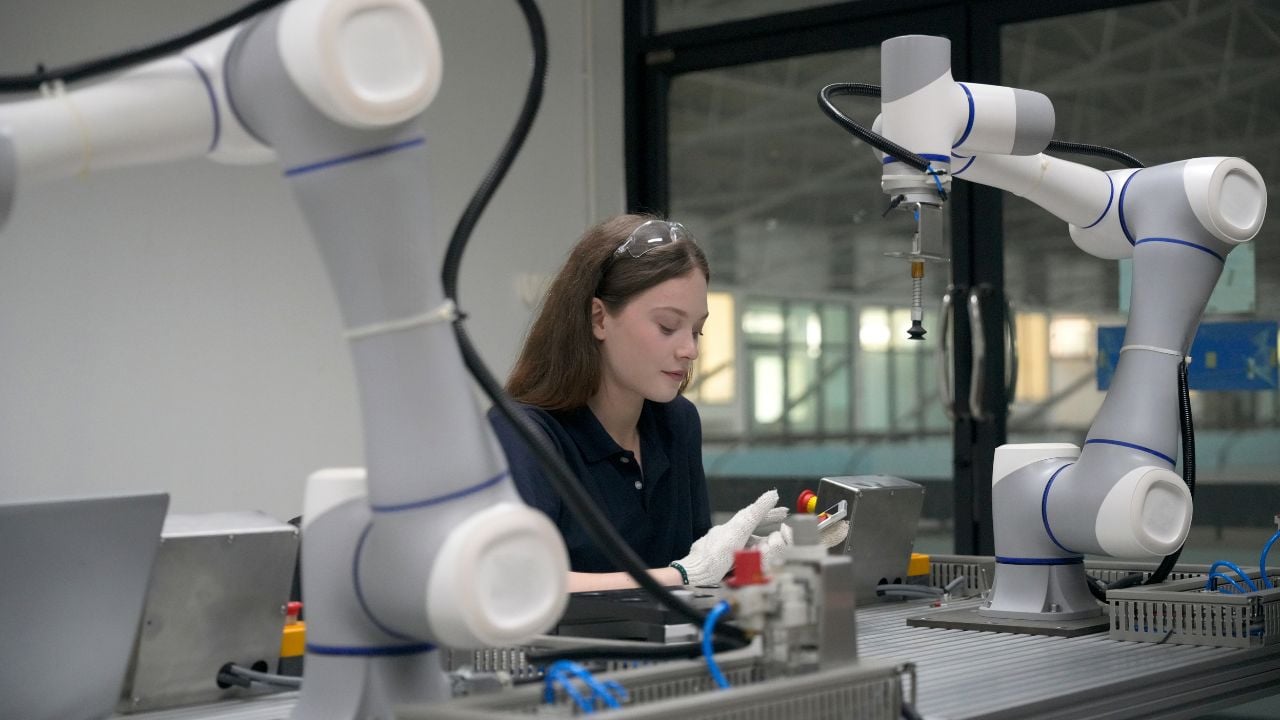
Robotics Platform
Robotics is one of the areas where the UNO Q stands out most.
Traditional robotics systems often require:
- A microcontroller for motor control
- A Linux computer for vision and AI
The UNO Q combines both functions into one platform.
Possible robotics projects include:
- Autonomous navigation robots
- AI-powered robotic arms
- Human-following robots
- Object-sorting systems
- Voice-interactive robots
The STM32 microcontroller can handle low-latency motor control while the Linux processor manages vision models, dashboards, and wireless networking simultaneously.
This architecture closely mirrors how many industrial robotics systems are designed.
Smart Factory Monitoring Dashboard
The UNO Q also works well for industrial-inspired IoT systems.
By connecting sensors for:
- Temperature
- Vibration
- Current monitoring
- Humidity
- Motion detection
Developers can build smart monitoring systems with onboard dashboards and wireless reporting capabilities.
The Linux environment enables:
- Local web servers
- Data visualization
- Database storage
- Remote access
- Cloud integration
The microcontroller side continues handling reliable real-time sensor acquisition.
This creates an excellent platform for learning Industrial IoT development.

Smart Agriculture and Greenhouse Control
Agricultural automation is another ideal application.
The UNO Q can monitor:
- Soil moisture
- Weather conditions
- Temperature
- Light levels
- Water flow systems
while simultaneously using AI-based analytics or camera systems to monitor plant growth.
Projects could include:
- Automated irrigation systems
- Crop monitoring
- Greenhouse climate control
- Livestock monitoring systems
- Smart weather stations
Because the board supports both wireless connectivity and local processing, systems can continue functioning even during internet outages.
Interactive Edge AI Kiosk
Another powerful use case is building interactive displays or kiosks.
Examples include:
- Visitor information systems
- Smart retail displays
- AI-powered educational exhibits
- Touchscreen automation systems
- Gesture-controlled interfaces
The Linux environment allows developers to create graphical interfaces while the microcontroller manages sensors, LEDs, relays, and physical controls.
This combination is particularly useful in embedded HMI (Human Machine Interface) applications.
Why the Arduino UNO Q?
The UNO Q represents a major evolution for the Arduino ecosystem. Instead of forcing developers to choose between a Linux SBC and a traditional microcontroller, the platform combines both into a single development environment.
That architecture enables:
- AI-assisted embedded systems
- Real-time automation
- Linux application development
- Wireless IoT systems
- Robotics and machine vision
- Advanced educational projects
For engineers and makers, the UNO Q is less about replacing classic Arduino boards and more about expanding what Arduino projects can become.
As edge AI, robotics, and intelligent automation continue growing, boards like the UNO Q may represent the next major phase of embedded development.