
Repeated heating and cooling put electronic test equipment through a different kind of stress. As test cycles become more demanding, the materials holding temperature-control systems together are becoming as important as their cooling performance.
An electronic component might spend years operating within a fairly predictable temperature range. Before it gets there, however, it could undergo hundreds or thousands of temperature changes as engineers test its performance and reliability.
The equipment performing those tests has to endure the same punishment.
Temperature cycling is essential to semiconductor qualification, optical transceiver testing and many other electronics manufacturing processes. Engineers deliberately expose devices to changing temperatures to measure performance, identify weaknesses and verify operation under conditions resembling those encountered in service.
But rapid changes between hot and cold create mechanical stress inside the equipment responsible for controlling those temperatures. Over time, the repeated expansion and contraction of materials can damage solder joints, bonding interfaces and other parts of the thermal assembly.
This presents a problem for manufacturers. Faster temperature transitions help increase test throughput, but the equipment must survive repeated cycles without losing accuracy or requiring frequent maintenance.
The challenge is no longer limited to how quickly a system reaches its target temperature. Engineers also need to consider how many times it can get there.
The Mechanical Problem Behind Temperature Cycling
Every material expands and contracts as its temperature changes. The amount of movement depends on its coefficient of thermal expansion, or CTE.
When two materials with different CTE values are joined, they attempt to expand or contract by different amounts. The bond between them restricts that movement, creating mechanical stress.
In electronic assemblies, this stress often concentrates around solder joints and interfaces between dissimilar materials. Repeated temperature changes can gradually weaken those connections through fatigue.
The same problem appears inside thermoelectric coolers.
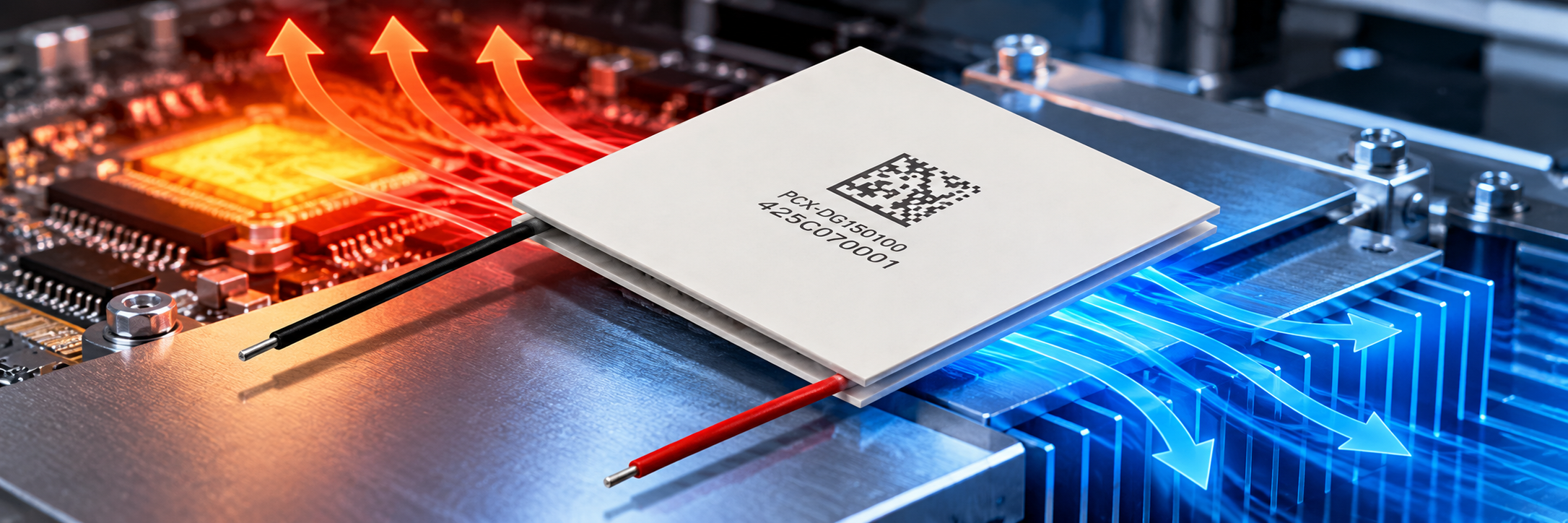
A thermoelectric cooler, or TEC, uses the Peltier effect to transfer heat when electrical current passes through semiconductor elements. Reversing the current reverses the direction of heat flow, allowing the device to provide heating or cooling.
The absence of moving mechanical parts makes TECs attractive for applications requiring compact packaging, precise temperature regulation and frequent temperature changes.
However, a typical TEC contains multiple materials, including semiconductor elements, copper interconnects, solder joints and ceramic substrates. These materials do not all expand at the same rate.
When a TEC repeatedly heats and cools, the interfaces between those materials experience cyclic mechanical loading. Over enough cycles, rigid connections become vulnerable to fatigue, cracking and delamination.
The cooler might continue operating initially, but its thermal performance can become less consistent as internal damage develops.
Why Test Equipment Makes the Problem Worse
Temperature cycling occurs in many electronic systems, but production test equipment presents particularly demanding conditions.
Consider the final testing of optical transceivers used in high-speed communications equipment.
An optical transceiver must operate reliably across its specified temperature range. Manufacturers therefore test parameters such as optical output power, wavelength stability and bit-error rate under different thermal conditions.
The device under test may be powered throughout the process, generating heat while the test system moves between cold, ambient and hot setpoints.
The TEC must remove heat from the operating device while also responding to changes in the required temperature.
Unlike equipment operating at a relatively stable setpoint, a production test head may repeat this sequence continuously as devices move through the manufacturing line.
Semiconductor test sockets face similar conditions. Devices may undergo temperature changes during characterization, final testing or reliability screening.
Larger devices and increasing heat loads make temperature uniformity more difficult to maintain. The cooler must deliver sufficient heat-pumping capacity without introducing large gradients across the device under test.
At the same time, the repeated thermal transitions place stress on the TEC itself.
A cooling failure in this environment has consequences beyond replacing a damaged component. Poor temperature control can invalidate test results, interrupt production or force manufacturers to repeat a test sequence.
For high-volume operations, equipment uptime becomes part of the thermal design calculation.
Changing the Bond Instead of the Cooling Principle
One approach to improving TEC durability involves modifying the interfaces between the cooler’s internal materials.
Conventional designs rely on relatively rigid connections between ceramic substrates and conductive elements. These connections provide electrical and thermal performance but also transmit mechanical stress when the assembly changes temperature.
Introducing a compliant, thermally conductive layer allows some of the differential expansion to be absorbed through controlled deformation.
The material still needs to transfer heat effectively. Excessive thermal resistance would undermine the cooler’s performance, particularly in applications involving high heat flux.
The engineering challenge is finding a combination of thermal conductivity, mechanical compliance and long-term stability.
Tark Thermal Solutions recently introduced its PowerCycling PCX-DG series with compliant bonding layers at both ceramic-side interfaces of the thermoelectric module.
The company says this dual-interface construction reduces the mechanical stress generated during repeated heating and cooling.
According to Tark, selected PCX-DG configurations have been validated for more than 200,000 power cycles without performance degradation, depending on form factor.
The series is designed for applications including semiconductor test sockets and end-of-line optical transceiver testing, with a maximum operating temperature rating of 120°C.
The development illustrates how reliability improvements can come from changes to materials and interfaces rather than a completely different cooling technology.
Reliability Depends on the Entire Thermal Assembly
Improving the durability of the TEC is only one part of designing a reliable temperature-control system.
Engineers also need to consider how the cooler is mounted, how heat moves through the surrounding assembly and how the controller responds to changing thermal loads.
A thermoelectric device must reject heat from its hot side while absorbing heat at its cold side. If the heat sink cannot dissipate the combined heat load and electrical input, the cooler’s performance suffers.
Mounting pressure also matters. Excessive force or uneven contact can introduce mechanical stress into ceramic substrates. Poor thermal contact increases resistance between the cooler and adjacent surfaces.
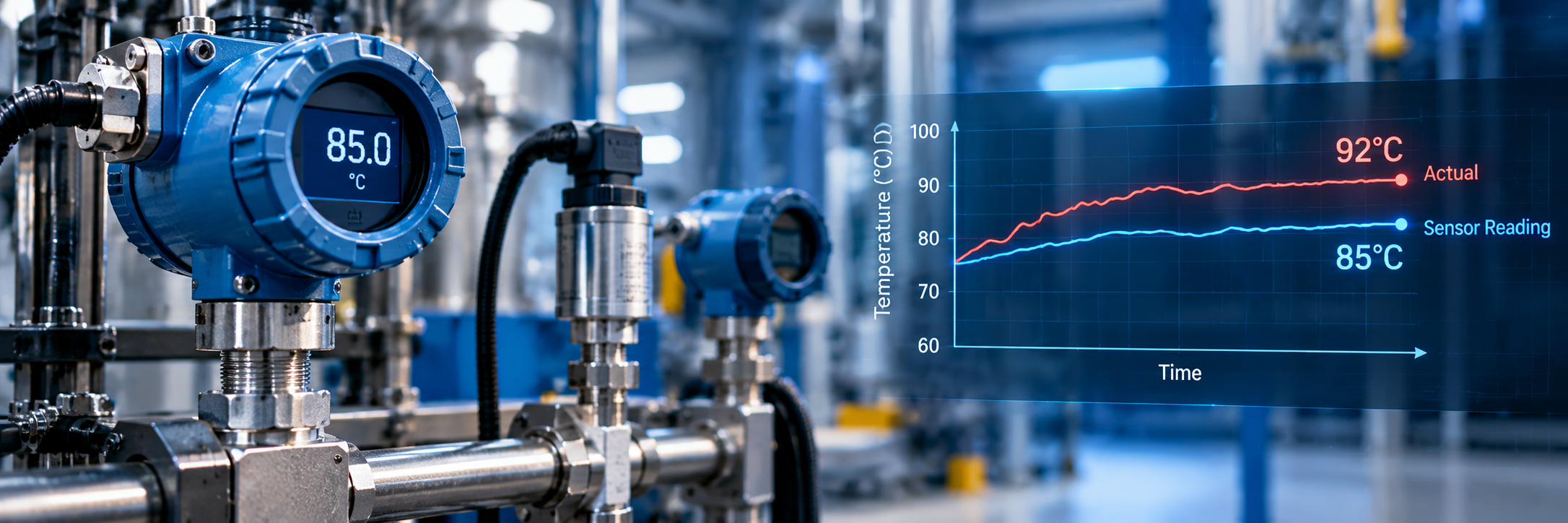
Temperature sensors and control algorithms introduce another set of considerations.
Aggressive control settings may cause overshoot or oscillation around the target temperature. In systems with frequent setpoint changes, this behavior can increase unnecessary thermal cycling.
Engineers therefore need to evaluate the entire assembly, including mechanical mounting, heat rejection, sensing, control response and expected duty cycle.
A TEC rated for a particular number of cycles under controlled test conditions will not necessarily deliver identical service life in every application.
The actual temperature range, ramp rate, electrical loading and mounting conditions all influence the stress experienced by the device.
A Different Way to Evaluate Thermal Performance
Cooling capacity and temperature differential remain important specifications when selecting a thermoelectric device. But for applications involving repeated thermal transitions, those numbers tell only part of the story.
Cycle life, mechanical construction and performance stability over time deserve equal attention.
A cooler with excellent initial performance offers little advantage if its internal connections begin deteriorating long before the rest of the test equipment reaches the end of its useful life.
The growing demands of semiconductor and optical component testing make this distinction increasingly important.
As manufacturers push for faster testing and more precise temperature control, the thermal management system must deliver both performance and durability.
Sometimes the most important improvement is not how much heat a cooler removes. It is how well the materials holding it together survive doing the same job thousands of times.
Sources
- Tark Thermal Solutions, PCX-DG Series announcement, October 13, 2026
- Tark Thermal Solutions, Modern Thermoelectrics Designed for Point-of-Care Testing, application note, July 2025.
- Tark Thermal Solutions, PowerCycling PCX product and technical documentation.