

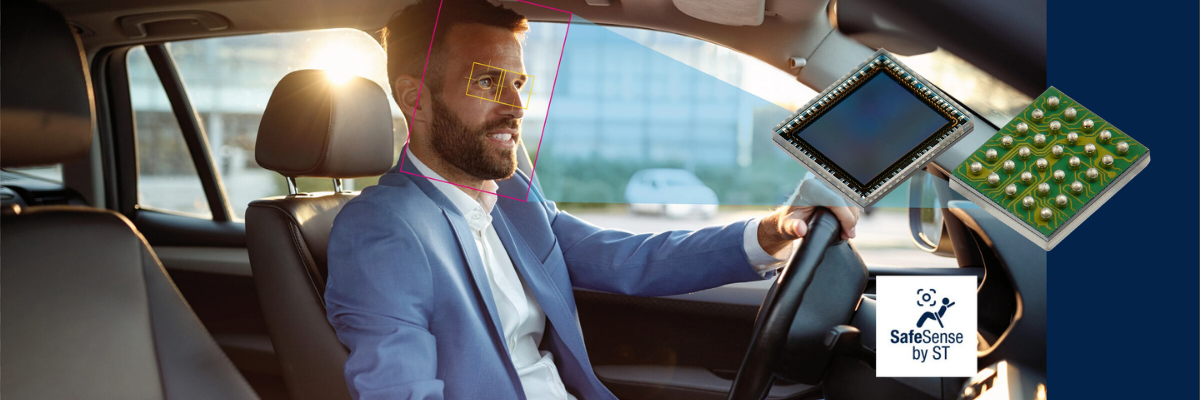
Driver-monitoring cameras are finding their way into more vehicles, but adding them across an entire model lineup presents a cost challenge. Automakers need cameras capable of capturing reliable images in changing lighting conditions without requiring expensive optics, additional processing hardware or larger camera modules.
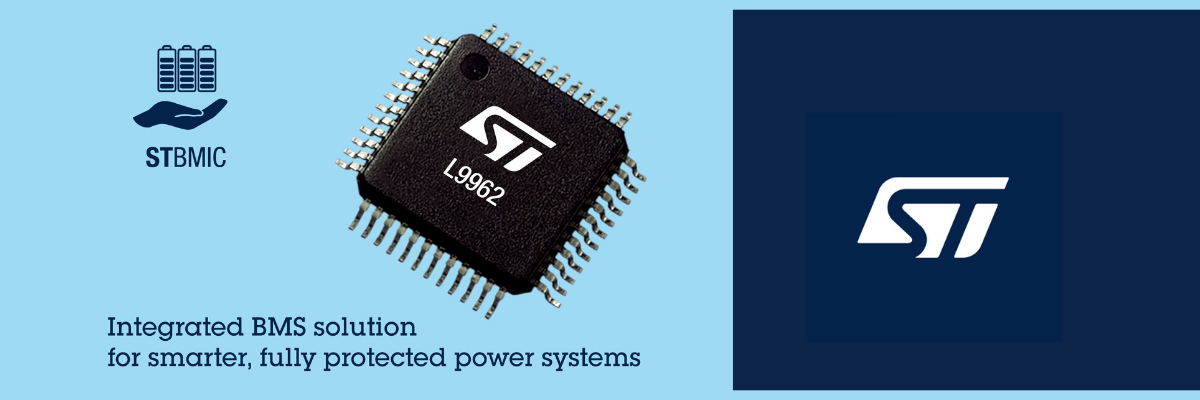
STMicroelectronics is addressing those tradeoffs with the ST SafeSense VD56GA, a new 1.1-megapixel automotive image sensor designed for infrared driver and occupant monitoring.
The sensor combines improved infrared sensitivity with integrated image processing in a compact package. ST says the design will help automakers and Tier 1 suppliers bring in-cabin monitoring to higher-volume vehicle platforms without substantially increasing camera-system costs.
Better Infrared Imaging Without a Larger Sensor
In-cabin cameras need to capture usable images in conditions ranging from bright sunlight to complete darkness. Infrared imaging allows these systems to monitor drivers and passengers without relying on visible light.
The VD56GA uses ST’s new DeepNIR backside-illuminated pixel architecture, which is optimized for infrared imaging.
Compared with the previous generation, ST reports a 35% improvement in image sharpness, measured by modulation transfer function (MTF), and nearly 60% higher quantum efficiency. The latter measures how effectively the sensor converts incoming light into an electrical signal.
Together, these improvements allow the sensor to capture sharper images with greater infrared sensitivity while maintaining a 1.1 MP resolution.
That combination is particularly useful for cameras installed behind displays or in other locations where available light and mounting space are limited.
ST also claims the VD56GA is the only sensor in its class to deliver this combination of optical resolution and infrared sensitivity.
Reducing the Cost of the Complete Camera
The sensor’s imaging improvements are intended to reduce costs beyond the sensor itself.
According to ST, the VD56GA’s sensitivity and image quality allow camera manufacturers to use less expensive optics, simplify infrared illumination and reduce optical filtering requirements.
The device also includes several image-processing functions that would otherwise require additional resources. These include automatic exposure, dark calibration, image cropping, mirroring and piecewise-linear processing.
Integrating these functions into the sensor reduces the need for external image-processing hardware and simplifies camera development.
The VD56GA measures 3.7 mm × 3.2 mm in a chip-scale package, giving engineers more flexibility when positioning cameras in dashboards, instrument clusters and other space-constrained areas.
It supports both RAW and YUV output formats, allowing manufacturers to integrate the sensor into different electronic architectures and image-processing pipelines.
In-Cabin Sensing Moves Into Higher-Volume Vehicles
The VD56GA arrives as driver and occupant monitoring becomes more common across the automotive market.
Yole Group expects volumes in this market to exceed 70 million units by 2031, according to imaging analyst Anas Chalak. As manufacturers expand these systems beyond premium vehicles, camera cost and integration requirements are becoming increasingly important.
For ST, the VD56GA is part of a growing automotive imaging portfolio. Earlier in 2026, the company announced it had shipped its 10 millionth SafeSense automotive image sensor.
The new device will be manufactured using ST’s integrated production model, with front-end manufacturing at its Crolles facility in France and packaging in Asia.
For automotive engineers, the VD56GA offers a way to improve infrared image quality without increasing sensor resolution or module size. Its combination of higher sensitivity, embedded processing and compact packaging is aimed at making driver and occupant monitoring less expensive to integrate across high-volume vehicle programs.
Product Information: VD56GA | Product – STMicroelectronics