

Medical imaging devices have become remarkably small over the past decade. Procedures that once required larger instruments can now be performed with endoscopes narrow enough to navigate tiny anatomical pathways while delivering increasingly detailed images.
That trend is creating new challenges for device manufacturers. As endoscopes shrink, engineers must find ways to fit image sensors, optics, illumination, cabling, shielding, and electronics into spaces measured in millimeters—all while maintaining image quality, reliability, and compliance with strict medical standards.
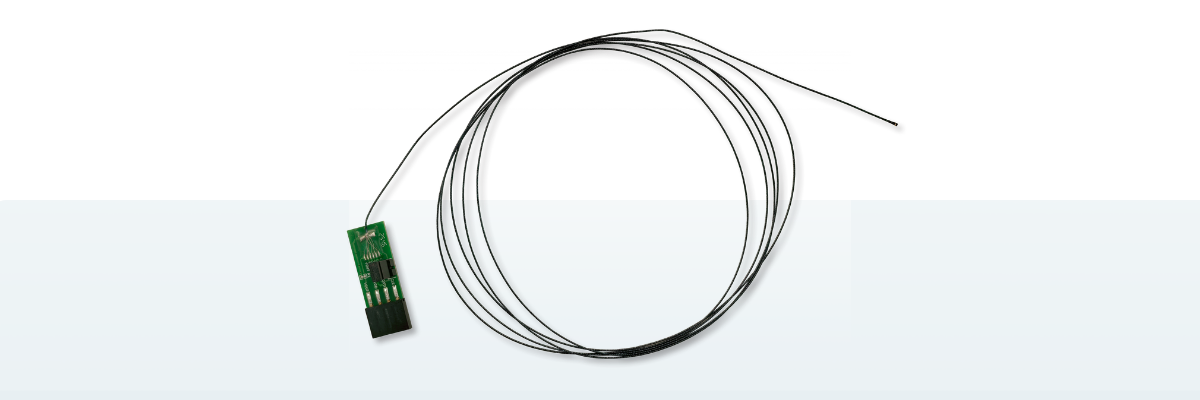
To address these requirements, OMNIVISION has introduced several new OVMed® ultra-thin medical-grade LED cable modules designed for single-use endoscopes. The modules combine image sensors, optics, illumination, and cabling into pre-qualified assemblies that can help medical-device manufacturers accelerate development and simplify integration.
The Push Toward Smaller Endoscopes
Across many areas of medicine, there is growing demand for minimally invasive procedures. Smaller instruments can often improve patient comfort, reduce recovery times, and provide physicians access to anatomical regions that may be difficult to reach with larger devices.
This trend has fueled adoption of chip-on-tip endoscope architectures, where the image sensor is positioned directly at the distal tip of the device. By placing the sensor closer to the imaging target, manufacturers can improve image quality while reducing the size and complexity associated with traditional optical relay systems.
However, shrinking the imaging system creates new engineering obstacles.
Every component inside the endoscope—including the camera, illumination system, cables, shielding, and connectors—must fit within increasingly tight mechanical constraints. At the same time, the system must deliver high-resolution images, withstand sterilization and handling requirements, and meet stringent medical safety standards.
Why the Cable Matters
When discussing endoscope design, attention often focuses on the image sensor. Yet the cable assembly plays an equally important role.
The cable serves as the link between the camera module at the distal tip and the electronics located at the proximal end of the device. Any signal degradation, electromagnetic interference, or mechanical failure can directly impact image quality and system reliability.
As endoscopes become thinner and more flexible, cable design becomes increasingly challenging.
Engineers must balance several competing requirements:
- Small diameter
- Mechanical flexibility
- Signal integrity
- Electromagnetic compatibility
- Durability during handling and use
- Cost-effective manufacturing
Meeting all of these requirements simultaneously is particularly important in single-use endoscopes, where manufacturers must optimize both performance and production costs.
A Turnkey Approach to Medical Imaging
OMNIVISION’s new OVMed cable modules are intended to reduce some of the integration burden faced by device manufacturers.
The modules combine image sensors, wafer-level optics, LED illumination, and cabling into a complete imaging subsystem that can be incorporated into endoscope designs. They support multiple CameraCubeChip® image-sensor platforms, including OCHTA, OCHFA, OCHSA, and OCH2B devices.
Because the modules arrive as pre-engineered assemblies, manufacturers can potentially reduce development time compared to designing and validating each component individually.
This approach may be particularly attractive for companies developing specialized endoscopes for specific procedures, where development timelines and regulatory requirements can significantly influence time-to-market.
Supporting a Wide Range of Procedures
The versatility of modern endoscopy continues to expand beyond traditional gastrointestinal applications.
Today’s imaging systems are used across numerous medical specialties, including ophthalmology, pulmonology, cardiology, urology, orthopedics, gynecology, and minimally invasive surgery.
As a result, manufacturers increasingly require imaging platforms that can be adapted to different form factors and performance requirements.
OMNIVISION says its cable modules can be customized based on camera selection, cable type, connectors, LED illumination configuration, and distal-tip geometry. This flexibility allows manufacturers to tailor imaging systems for procedures ranging from bronchoscopy and ureteroscopy to arthroscopy and laparoscopy.
Engineering for Medical Environments
Beyond image quality, medical devices must operate reliably in environments filled with electronic equipment.
Electrosurgical tools, imaging systems, monitors, wireless devices, and other equipment can create electromagnetic interference that may affect sensitive electronics. For this reason, electromagnetic compatibility (EMC) and electromagnetic interference (EMI) protection are critical considerations during endoscope development.
According to OMNIVISION, the new cable modules incorporate shielding designed to meet IEC 60601 requirements, helping protect image transmission while reducing the risk of interference with surrounding medical equipment.
The company also notes that the modules are designed to withstand high-energy discharges encountered during multimodal medical procedures.
Reducing the Certification Burden
One of the most time-consuming aspects of medical-device development is verification and regulatory approval.
Medical imaging components must undergo extensive testing covering areas such as safety, biocompatibility, sterilization compatibility, environmental stress, waterproofing, electromagnetic performance, and material compliance.
OMNIVISION says its OVMed cable modules undergo comprehensive qualification and are manufactured in ISO 13485-certified facilities. By using pre-qualified medical-grade components, device manufacturers may be able to simplify portions of the validation process and reduce development risk.
As endoscopes continue to become smaller, more capable, and increasingly procedure-specific, integrated imaging modules are emerging as a way to help manufacturers balance performance, cost, and regulatory requirements. Rather than focusing solely on image sensors, the industry is increasingly viewing the entire imaging chain—from optics and illumination to cabling and shielding—as a critical element in next-generation endoscope design.