
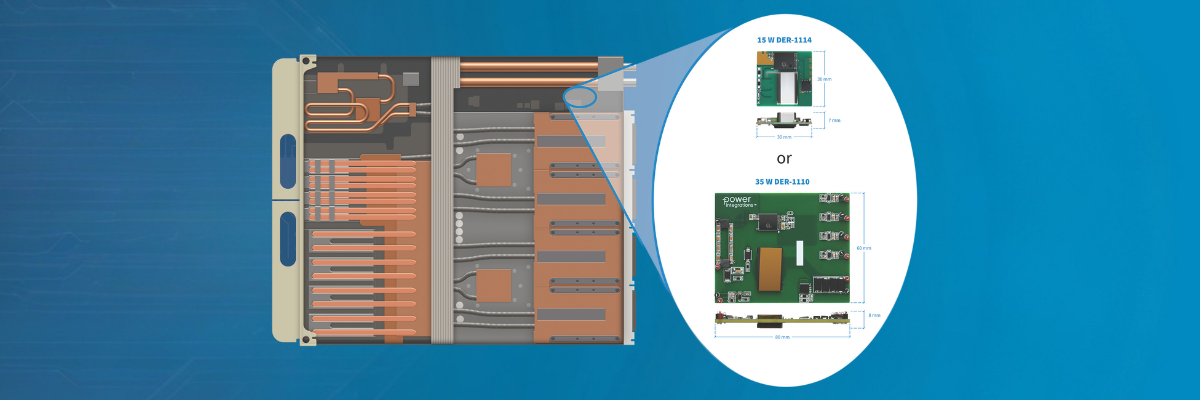
As AI data centers continue to increase power density, engineers are seeking ways to maximize board space while maintaining efficiency and reliability. Two new reference designs for auxiliary power supplies address this challenge with ultra-compact form factors optimized for 800 VDC AI server architectures.
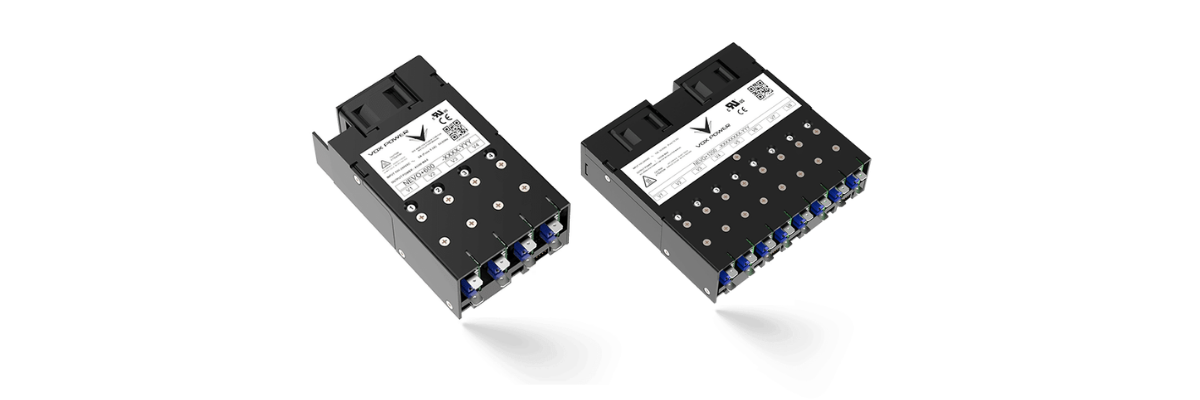
The designs target auxiliary power requirements within high-voltage AI data centers, where compact power conversion solutions are needed to support control and monitoring circuitry without consuming valuable board real estate. One design delivers 15 W from a single output in a 30 mm × 30 mm footprint with a 7 mm profile, while the larger design provides 35 W across six isolated output rails in an 80 mm × 60 mm footprint with an 8 mm profile.
Designed for NVIDIA’s Kyber liquid-cooled blade-rack architecture, the reference designs are intended to free space on densely populated power distribution boards (PDBs). According to the company, the designs can reduce board-space requirements by approximately 30 percent while also lowering bill-of-materials (BOM) count by roughly 30 percent compared with alternative approaches.
Auxiliary power supplies play an important role in modern AI infrastructure by powering components responsible for control, monitoring, and system-management functions. These include microcontrollers, gate drivers, operational amplifiers, and other support circuitry that help ensure overall system reliability and safe operation.
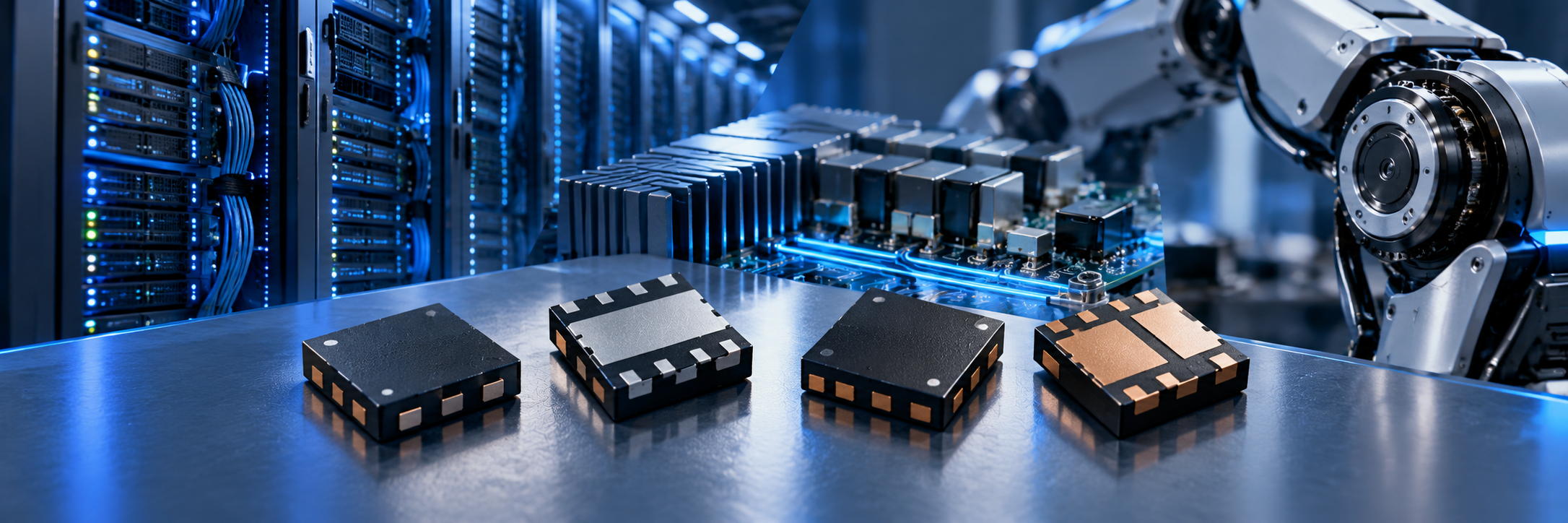
Both reference designs are based on integrated flyback converter technology incorporating 1700 V gallium nitride (GaN) devices. The designs leverage a single-device architecture that combines high-voltage switching and control functions into one package, reducing component count and simplifying implementation.
The use of 1700 V-rated GaN technology enables operation on nominal input voltages up to 1000 VDC, making the designs suitable for emerging high-voltage AI data center power architectures. Operating in discontinuous conduction mode (DCM), the designs achieve efficiencies of at least 88 percent across operating conditions, with peak efficiencies approaching 90 percent.
As data center operators continue exploring higher-voltage distribution architectures to improve efficiency and reduce copper losses, compact auxiliary power supplies are becoming increasingly important. While the primary power system delivers energy to processors, accelerators, and storage devices, auxiliary converters provide the low-power rails needed for system control, monitoring, and housekeeping functions.
The newly released designs provide engineers with validated starting points for implementing auxiliary power systems in high-voltage AI infrastructure while reducing design complexity and component count.
The reference designs are available as free downloads and include:
- A 35 W multi-output flyback auxiliary power supply featuring six isolated output rails for high-voltage AI data center applications.
- A 15 W single-output flyback auxiliary power supply intended for compact auxiliary power requirements in AI server environments.
As AI systems continue to push power-density limits, highly integrated power-conversion solutions such as these may help designers balance efficiency, reliability, and space constraints within next-generation data center platforms.